Last updated November 22, 2026
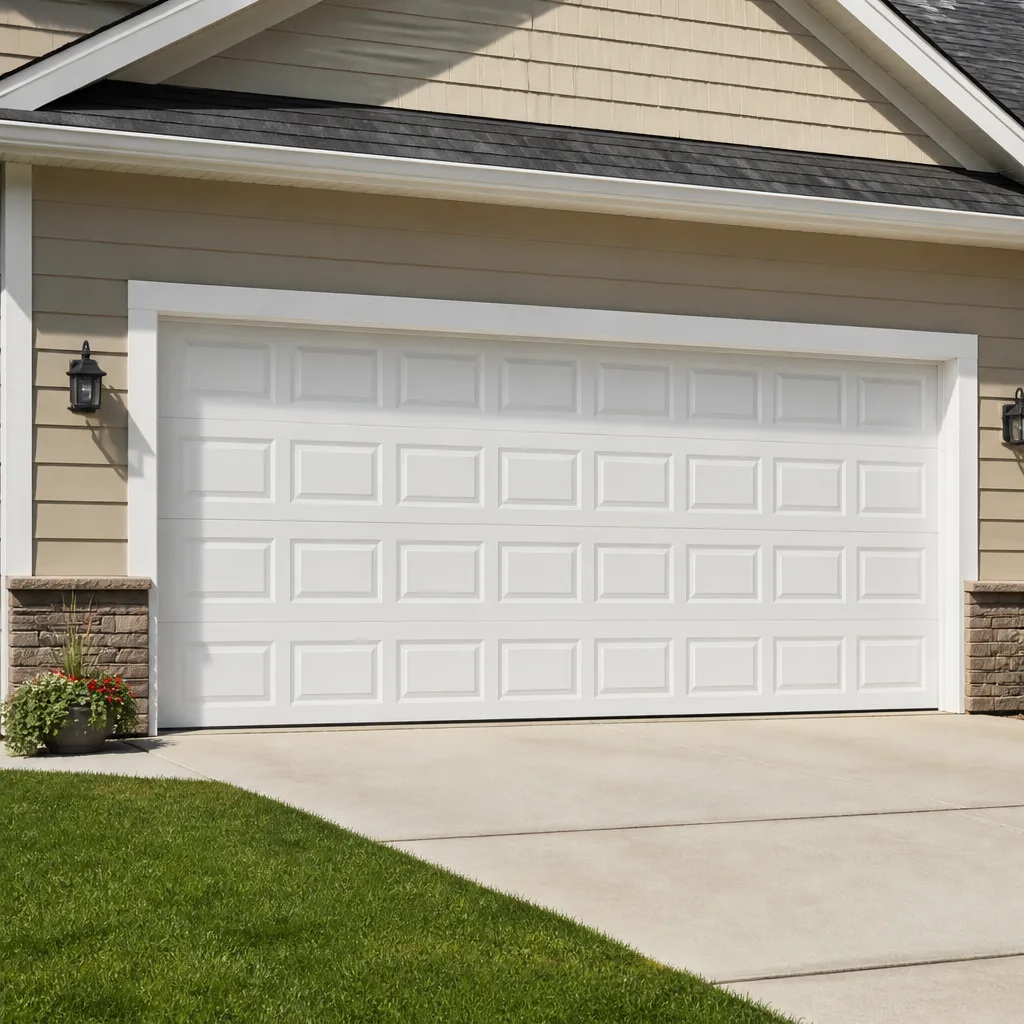 Raised-panel steel
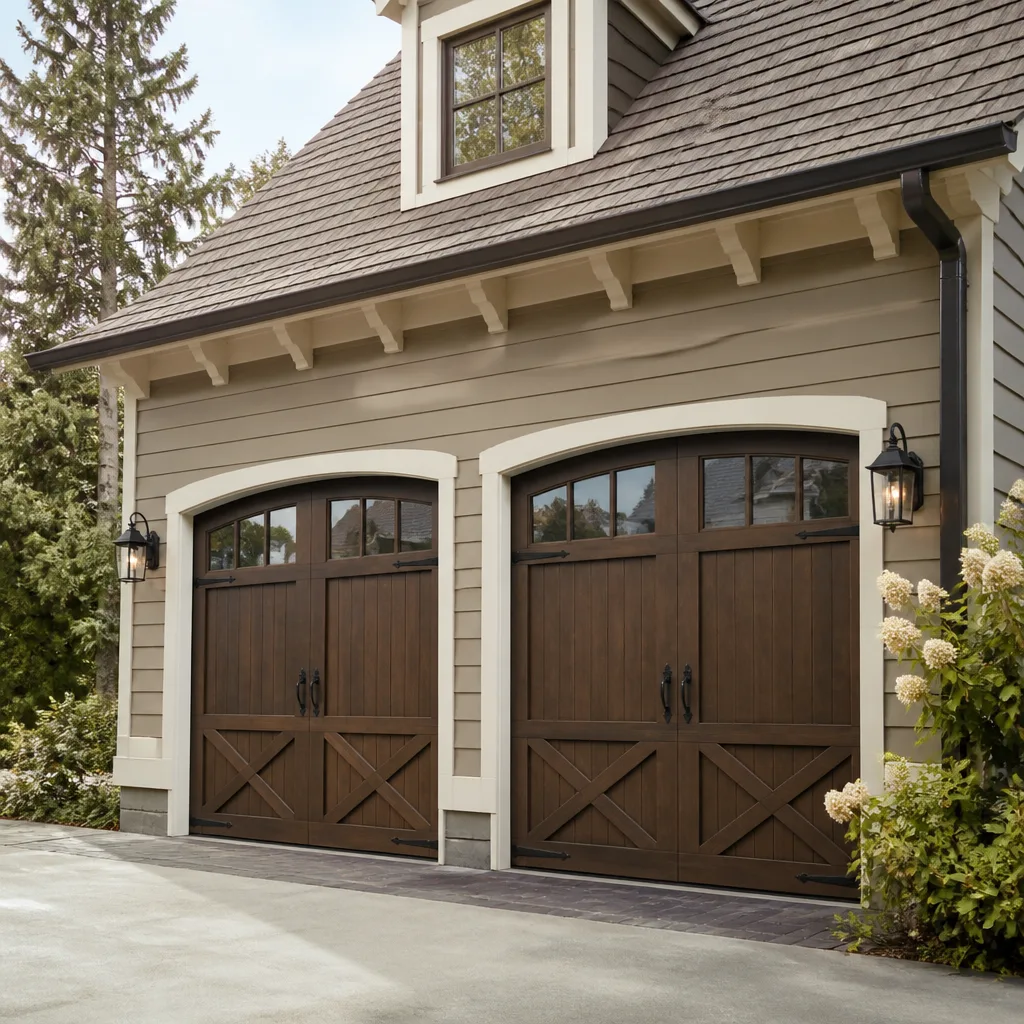 Carriage house
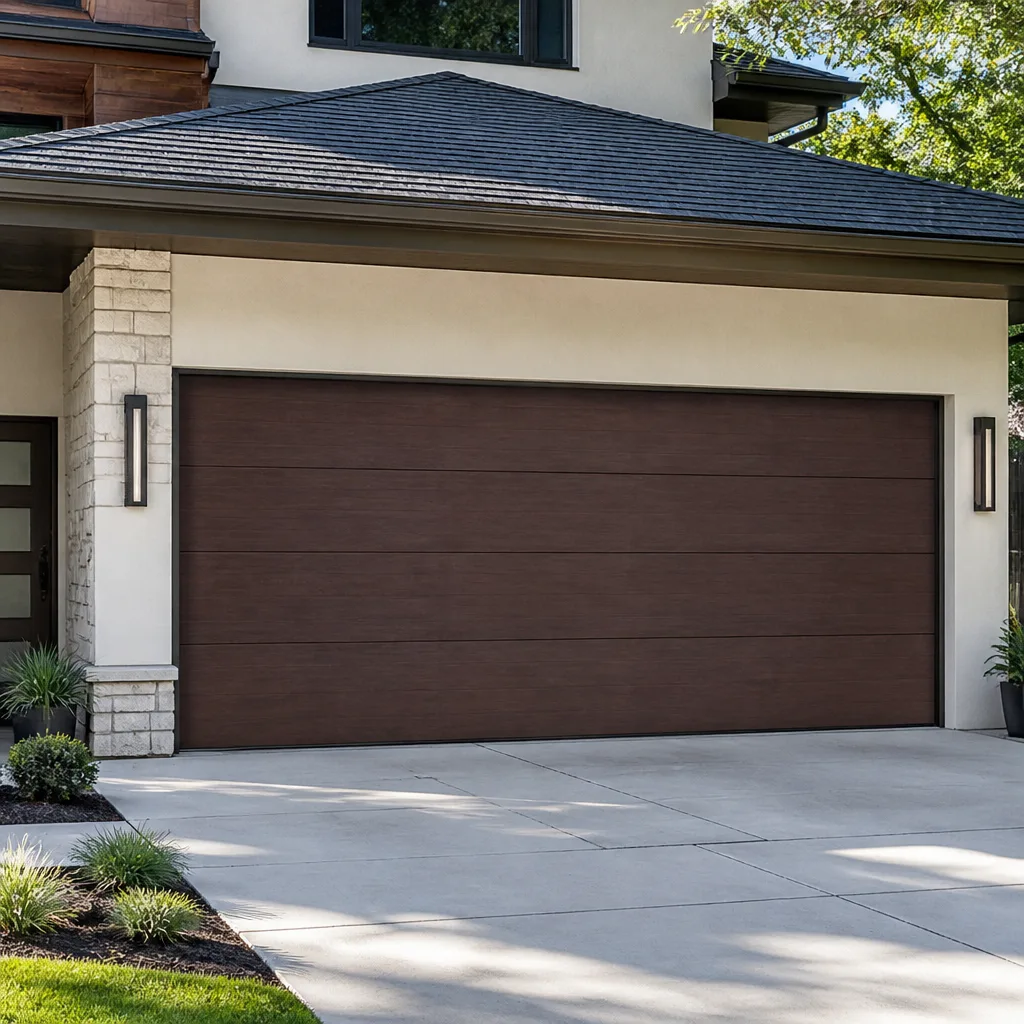 Modern flush
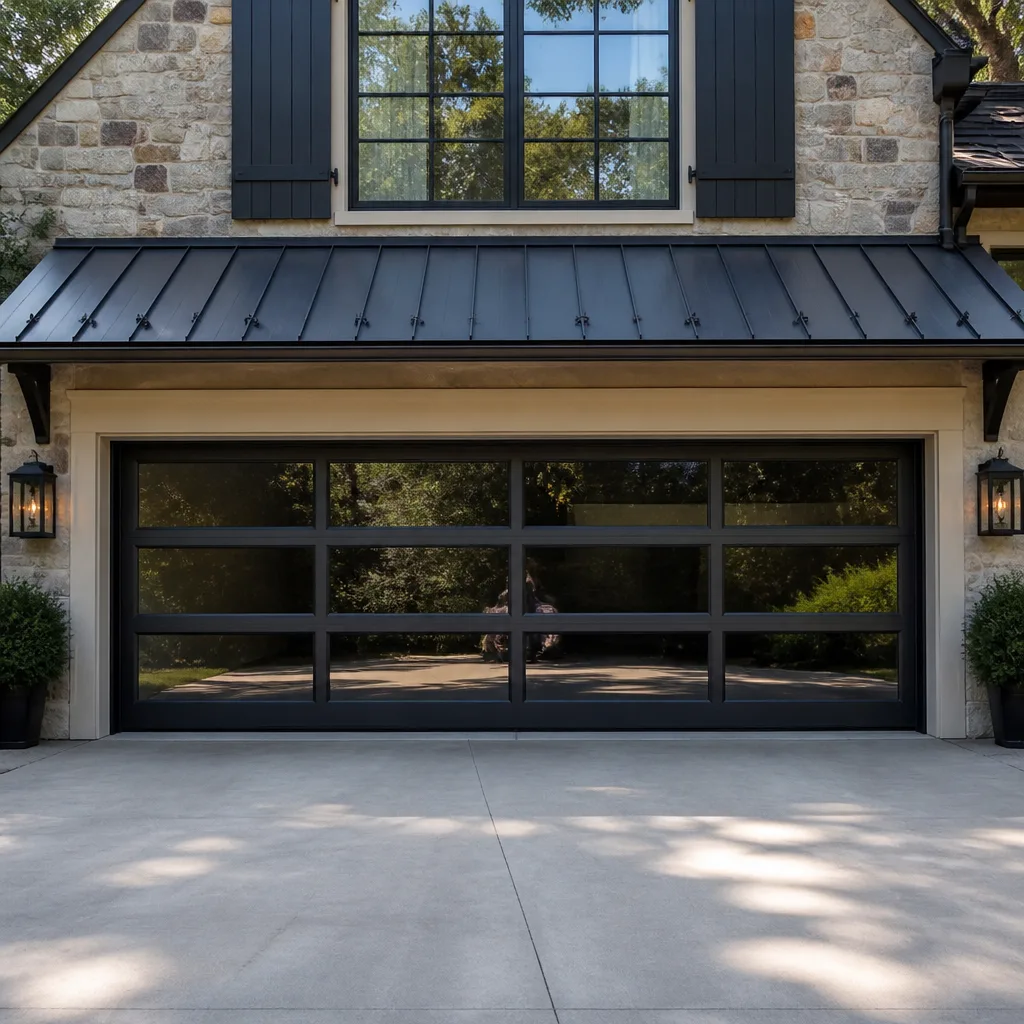 Full-view glass
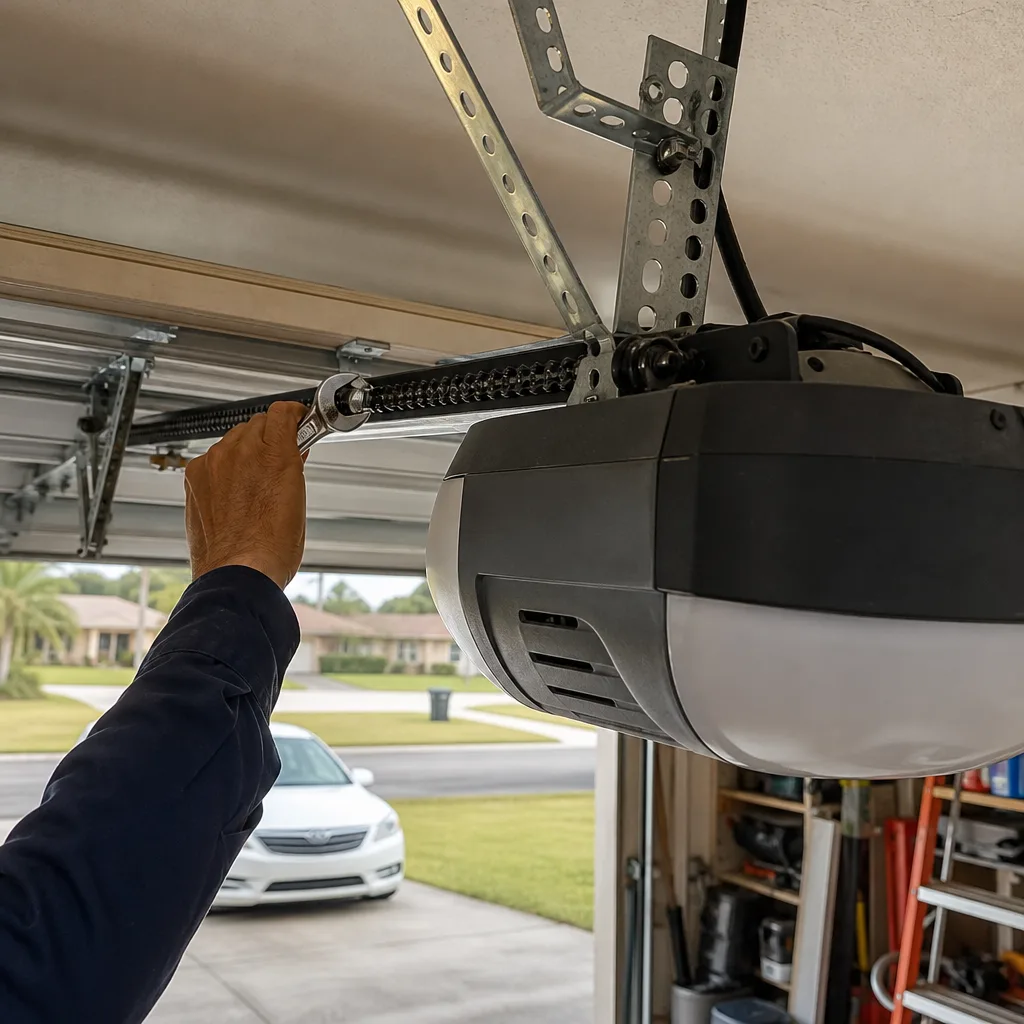
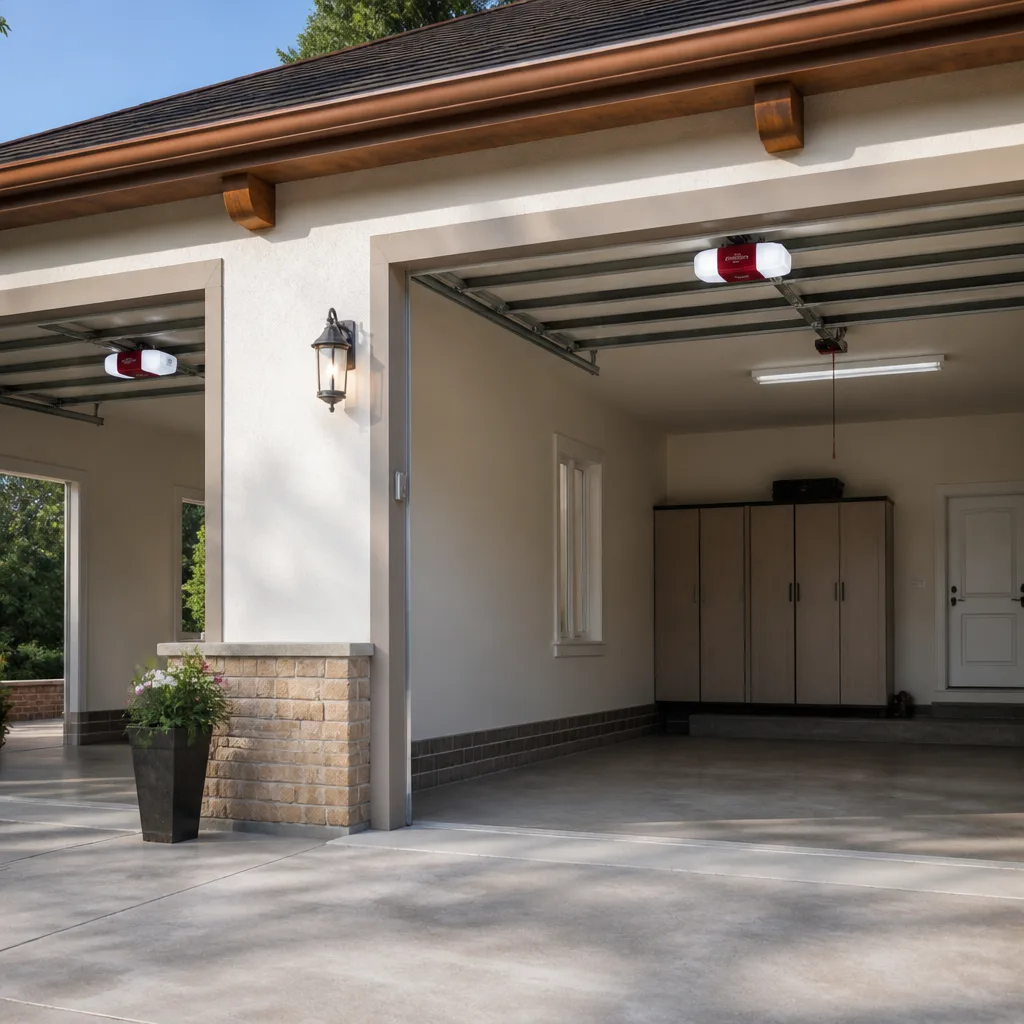 LiftMaster openers
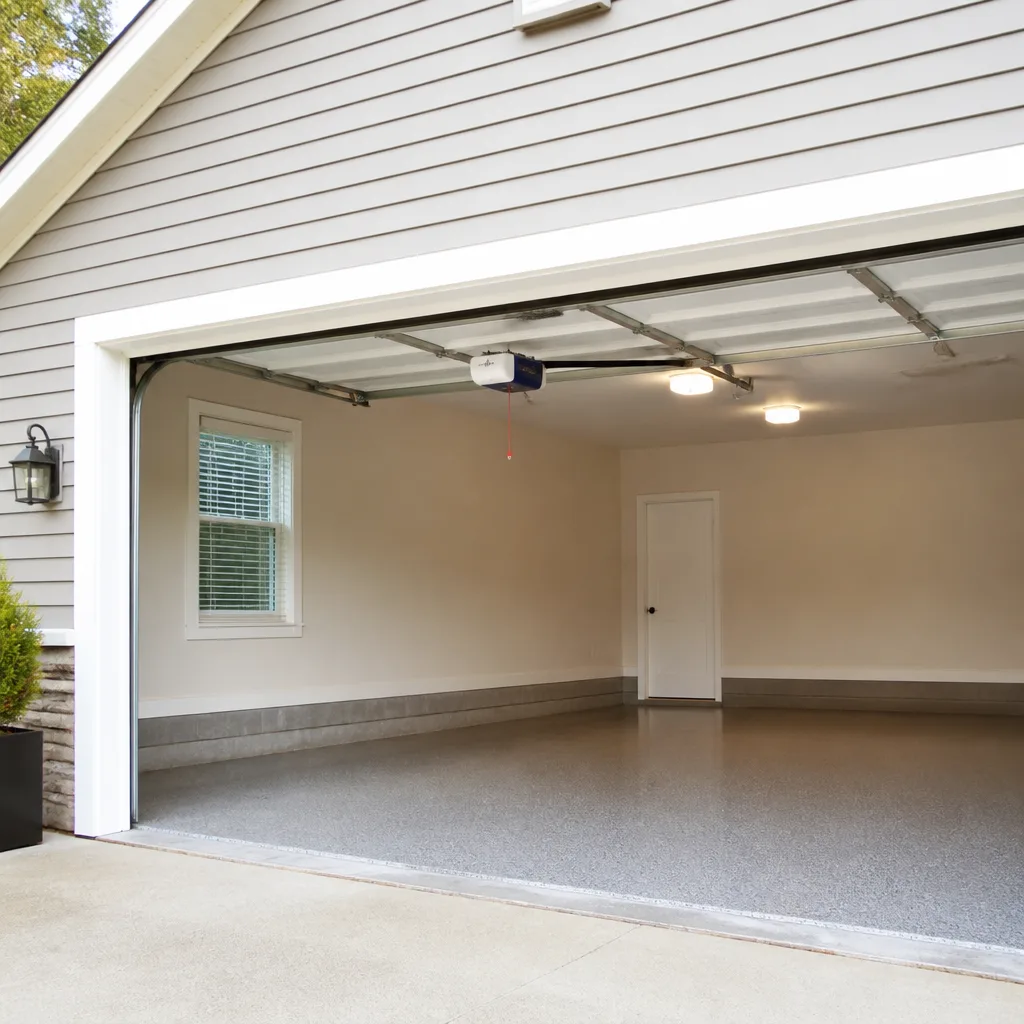 Chamberlain openers
Full 25-point door and opener safety check with every visit - springs, cables, rollers, tracks, and your LiftMaster or Chamberlain opener included
You get a price before we start. It does not change when the pro arrives.
Get your free estimateHow to Hire a Garage Door Contractor in Miami Gardens: A Step-by-Step Guide
Florida has one of the most specific contractor licensing systems in the country, and yet “does he seem trustworthy?” is still how most homeowners pick their garage door company. That gap matters more in Miami Gardens than in most places, because after every major storm the market fills with people offering garage door work who know how to sound confident and how to pressure a decision. This guide is about closing that gap. You’ll learn how to check a Florida license in about two minutes, what documentation Miami-Dade County expects before work begins, which red flags show up specifically after storms, and what questions separate a technician from a salesperson. It’s written for homeowners in Miami Gardens who depend on their garage door every single day.
Quick Answer
To hire a garage door contractor in Miami Gardens, verify the license through Florida’s DBPR database, confirm the company carries general liability and workers’ compensation coverage, ask for Miami-Dade product approval documentation on any new door or component, and insist on a written, itemized estimate before any work starts. A legitimate contractor will hand over all of this without hesitation. One who resists any part of it is telling you something important.
Styles & brands we work with
- Raised-panel steel
- Carriage house
- Modern flush
- Full-view glass
- LiftMaster openers
- Chamberlain openers
Table of Contents
- Why Verification Matters More in Miami Gardens
- How to Verify a Florida Contractor License in Under Two Minutes
- Miami-Dade Product Approval: What to Ask For and Why
- Post-Storm Red Flags in Miami Gardens
- What a Legitimate Written Estimate Should Include
- Questions That Separate a Technician From a Salesperson
- Insurance: What to Confirm Before Anyone Touches Your Door
- What a Good Garage Door Visit Actually Looks Like
Why Verification Matters More in Miami Gardens
Your garage door is the largest moving entry point on your house. It’s also the one most homeowners think about least, right up until it stops working. In Miami Gardens, where a lot of homes use the garage as the main way in and out, a door that won’t open in the morning is a genuine disruption, not a minor annoyance.
That daily dependence is exactly what makes the hiring decision worth taking seriously. Garage door work combines two separate mechanical systems: the door itself, with its springs, cables, tracks and panels, and the opener, with its motor, drive and controls. A contractor who understands only one side of that system will diagnose half the problem. And the most common and most dangerous repair in the trade, spring replacement, is also the one where an inexperienced or unlicensed operator can cause real injury.
Florida’s licensing environment is more structured than most states, which is good news for you. It means there’s a public record to check. It means there are documentation requirements. It means a contractor who has done things properly can prove it quickly, and one who hasn’t will struggle to fake it.
The tricky part is timing. Most homeowners hire a garage door contractor in a moment of urgency. The door is stuck, the car is trapped, and the first person who answers the phone gets the job. That urgency is the contractor’s best sales tool and your worst decision-making environment. This guide exists so you can do the vetting before the pressure hits, so that when something fails you already know the four or five checks that matter. If you’d rather start with a conversation, Miami Gardens Garage Door Repair Co takes calls at (877) 583-5491 and will walk you through a free estimate.
How to Verify a Florida Contractor License in Under Two Minutes
Florida contractors are licensed through the Department of Business and Professional Regulation, known as DBPR. The license lookup is public, free, and fast. Here’s the exact sequence.
- Ask for the company’s license number in writing. Not the individual’s name, the company’s license number. Get it in a text or email so there’s a record. A contractor who can’t produce this in the first conversation has already told you something.
- Open the DBPR license lookup. Florida’s DBPR maintains a public database searchable by license number, individual name, or business name. Search by the license number first, then cross-check the business name.
- Confirm the license is current, not just existing. The database shows status. “Current, active” is what you want. “Delinquent,” “suspended,” “null and void,” or “expired” are all stop signs, even if the contractor has a good explanation.
- Match the name on the license to the name on the estimate. A license belonging to a different company, or to an individual operating under a different business name, is a mismatch worth questioning directly.
- Check the license type. Florida licenses contractors in specific categories. A license that doesn’t cover the scope of work you’re hiring for isn’t the right license, no matter how current it is.
Take a screenshot of the result. It takes seconds and gives you a record of what you found, which is useful if anything goes sideways later.
A garage door company operating legitimately in Miami Gardens won’t be offended by any of this. We hand the number over without being asked, because we’ve watched enough homeowners get burned by the alternative. If a contractor gets defensive about the lookup, treat that as your answer.
Miami-Dade Product Approval: What to Ask For and Why
Miami-Dade County has its own product approval process for construction materials, and that process applies to garage doors and their components in ways a lot of homeowners don’t realize. The county maintains a list of approved products, and each approved product carries a Notice of Acceptance, usually called an NOA number.
Why does this matter to you? Because Miami-Dade’s approval requirements exist for a reason, and a garage door or component that isn’t approved for use in the county may create problems at permitting, at resale, or with your insurer. It also tells you whether the contractor is used to working inside the county’s system at all.
How to ask for it, plainly:
- “What’s the NOA number on this door?” Ask this before you sign anything involving a new door or a replaced panel. A contractor who works in Miami-Dade regularly will have this at their fingertips.
- “Can you send me the product approval documentation?” Get it in writing. The documentation should match the product being proposed, not a different model from the same manufacturer.
- “Does this job need a permit?” A door replacement generally does. If a contractor tells you a permit isn’t needed for a full door replacement, ask them to explain that in writing.
- “Who pulls the permit?” The answer should be the licensed contractor, not you. A homeowner who pulls their own permit is taking on the liability of the job.
If you’re unsure whether your specific job needs a permit, call the City of Miami Gardens building department and ask. That’s a two-minute phone call and it settles the question with the authority that actually enforces it.
This is one of the areas where brand familiarity helps. Clopay, Amarr, Wayne Dalton and Raynor all produce doors used widely across South Florida, and a contractor who works with those lines regularly knows which models carry the documentation the county wants. We work with all four, along with LiftMaster, Chamberlain, Genie and Craftsman on the opener side, which means the approval conversation is routine rather than a scramble.
Post-Storm Red Flags in Miami Gardens
After a major storm in South Florida, the contractor market changes character for a few months. Legitimate local companies get busy with real backlog. Unlicensed operators come in from out of state or out of county, offering fast turnaround and quoting door-to-door. The pattern is consistent enough that you can learn to spot it.
Watch for these specific signals:
- Door-to-door solicitation right after a storm. Legitimate garage door companies in Miami Gardens get work through referrals and repeat customers. Someone knocking on doors in a storm’s aftermath, offering an immediate quote, is working a different business model.
- Cash-only, and asking for a large deposit up front. A reasonable deposit on a custom-ordered door is normal. Demand for a large cash payment before any material is ordered is not. Pay by check or card so there’s a record.
- No written warranty. Ask specifically: what’s covered, for how long, and who honors it. If the answer is verbal, it isn’t a warranty, it’s a promise. Get it on paper or don’t proceed.
- No physical business address, or a PO box. You should be able to find the company’s registered address through the state’s business records. If the only address is a mailbox, you have no recourse if something goes wrong.
- Pressure to decide today. “This price is only good if you sign now” is a sales technique, not a business reality. Legitimate estimates hold for a reasonable period. If a contractor can’t give you a day to think about a four-figure purchase, that’s the red flag.
- Vanishing paperwork. No signed contract, no written estimate, no receipt for deposit. Every legitimate job has a paper trail from estimate through final payment.
The deeper issue with post-storm operators is follow-through. If a spring fails six months after the repair, or the opener stops responding, or the door sags off its track, you need someone who will come back. A contractor who was in Miami Gardens for three weeks after a storm and then moved on won’t be there. There’s a lot of value in choosing a company you can call again next year for a completely different job and know the number still works.
What a Legitimate Written Estimate Should Include
A verbal estimate is not an estimate. It’s a number someone said. The written document is what protects you, and the details in it tell you how the contractor operates. Here’s what should be in it.
- Itemized parts. Not “springs and hardware” but the specific parts, their quantities, and the brand. If the job involves replacing both springs on a two-spring door, the estimate should say so. Spring pricing is per spring, so a matched pair costs roughly twice a single spring.
- Brand specifications. Which manufacturer’s door or opener component is being installed. This matters for warranty, for future replacement parts, and for product approval documentation.
- Labor scope. What the crew is actually doing. Removing the old door, installing the new one, adjusting the tracks, programming the opener, hauling away the old door. All of that should be spelled out, or explicitly excluded.
- Permit responsibility. Whether a permit is being pulled, and by whom.
- Warranty terms. Manufacturer warranty on the parts, and the contractor’s own warranty on labor. These are usually two separate things and both should be written down.
- Payment schedule. What’s due when. Deposit on order, balance on completion is a normal structure. Anything unusual should be explained.
- The final price. The written estimate sets the price. Once you’ve signed an estimate that reflects what the contractor has seen on site, that number is your number. If something unexpected turns up mid-job, a legitimate contractor stops and discusses it with you before proceeding, not after the invoice arrives.
For repair work, an estimate can often be given over the phone for the common jobs, because the outcomes are predictable. A broken torsion spring on a standard door is a known scope. What isn’t predictable is what’s underneath: a bent track, a worn bearing plate, a cable that’s about to fail. A good estimate says what’s included and what might change the price, so there are no surprises.
If you want a written estimate for garage door repair in Miami Gardens, we provide those free, and the price quoted and agreed before work starts is the price.
Questions That Separate a Technician From a Salesperson
A sales-first company is trying to close a deal. A technician is trying to solve a problem. The questions below sound technical, but they’re really a diagnostic tool: they reveal which kind of company you’re talking to, because a salesperson won’t have the answers.
“What type of springs does my door have?” Residential garage doors use either torsion springs, which mount above the door on a shaft, or extension springs, which run along the sides. Different systems need different repair approaches and different parts. A technician knows instantly which one you have from the door’s age, size and manufacturer. A salesperson will hedge.
“What’s the NOA number for the door you’re proposing?” Already covered above, but it doubles as a filter. A company working regularly in Miami-Dade answers this without pausing. A company working outside the county’s approval system won’t know what you’re asking.
“What brand of hardware and opener do you use?” The answer should be specific, not “we use the best.” If a company can name the brands it works with, it’s signaling familiarity with the parts ecosystem. We work with Clopay, Amarr, Wayne Dalton and Raynor on doors, and LiftMaster, Chamberlain, Genie and Craftsman on openers, which covers most of what’s actually installed in Miami Gardens homes.
“How will you diagnose whether the problem is the opener or the door?” This is the question that separates someone who understands the system from someone who swaps parts. If a door won’t open, the cause could be a dead motor, a stripped gear, a broken spring, a jammed track, or a failed safety sensor. Each has a different fix and a different cost. A technician explains how they’ll narrow it down. A salesperson quotes you a new opener.
“What happens if the repair doesn’t fix it?” This tests the warranty and the approach. A contractor who stands behind a diagnosis will come back and make it right. One who won’t put that in writing is telling you something.
“Can you tell me roughly what this will cost before you come out?” For garage door spring repair and similar common jobs, a legitimate company can give a typical range over the phone and then confirm it on site. If the only answer is “we’ll have to see,” ask for a ballpark. You should be able to budget before anyone is dispatched.
Insurance: What to Confirm Before Anyone Touches Your Door
Two separate coverages matter. Ask about both, in writing, and ask for the certificate of insurance rather than a verbal yes.
General liability insurance. This covers damage to your property, including your door, your car, or your home, if something goes wrong during the job. This is the baseline. No legitimate company operates without it.
Workers’ compensation. This covers the technician if they’re injured on your property. The stakes are real with garage doors: a torsion spring under tension carries enough force to cause serious injury if it releases unexpectedly. If the technician is injured at your house and their employer doesn’t carry workers’ comp, you’re exposed. Hiring an uninsured crew can put your own homeowner’s policy at risk.
How to ask: “Can you send me your certificate of insurance?” The certificate is what your insurer will want if a claim ever comes up. If a contractor won’t send it, don’t proceed.
One more check: the certificate should be current, not expired, and it should name the business you’ve hired. A policy certificate is not the same as a business license, and you need both.
What a Good Garage Door Visit Actually Looks Like
Knowing the shape of a well-run visit helps you judge the one you get. Here’s what a professional garage door appointment looks like in Miami Gardens.
- It starts with questions, not a pitch. “How long has the door been doing this?” “Did anything happen right before it stopped?” “What kind of door is it?” The technician is building a diagnosis, not an upsell.
- There’s a physical inspection before a price. The technician checks the door balance, looks at the springs, examines the tracks for bends, tests the opener’s travel limits and force settings, and checks the safety sensors. That inspection is the basis for the price.
- You get a clear explanation of what’s wrong. In plain language, without jargon, including whether the problem is in the door mechanism or the opener. These are two different systems, and a good technician keeps them separate.
- The estimate is written and specific. Parts, labor, warranty, price. Agreed before work starts.
- The repair happens with the power disconnected. Anyone working on a garage door should be de-energizing the opener before touching hardware. Springs under tension are genuinely dangerous to handle without the right tools and training. This is not a repair to attempt yourself, and a technician who is casual about that is not one you want in your garage.
- There’s a function test before they leave. The door goes up and down, the safety sensors stop it when blocked, the remote works, and the balance is right. Before the technician leaves, you should see the door working properly with your own eyes.
If it’s the opener that’s failing, the same logic applies. A garage door opener repair visit should start with diagnosis: is it the motor, the logic board, the drive gear, the remote, or the sensor? Genie, LiftMaster, Chamberlain and Craftsman openers all have their own failure patterns, and a technician familiar with those brands can often identify the problem quickly.
Common Mistakes to Avoid
- Hiring before checking the DBPR license lookup. It takes two minutes and it’s the single most protective step in the whole process. Skipping it because the contractor “seemed honest” is how most bad outcomes start.
- Accepting a verbal estimate. A number said out loud is not a price. Without a written document, you have no way to hold anyone to what they quoted, and you have nothing to compare another bid against.
- Assuming spring pricing is per job. Spring pricing is per spring. Almost every door has two, and they’re normally replaced together as a matched pair, so the pair costs roughly twice a single spring. An estimate that quotes one spring for a two-spring door is either a mistake or a lowball that will get corrected after work starts.
- Paying cash with no receipt. A large cash deposit for a garage door job, especially from a post-storm solicitation, is the single most common pattern in contractor fraud. Pay by traceable method and always get a receipt.
- Not asking about product approval. For any new door or component in Miami-Dade County, the NOA number matters. A door installed without the right approval can create problems later, including at resale.
- Choosing the cheapest bid without checking the warranty. A cheap install with no labor warranty is not cheap if the door needs adjustment in three months. Compare the warranty terms along with the price.
- Treating the opener and the door as one thing. If the door won’t close, the problem might be the door, the opener, or the sensor. A contractor who jumps straight to a new opener quote hasn’t diagnosed anything. In Miami Gardens, a lot of doors are older than their openers, and a proper diagnosis tells the two apart.
See the difference
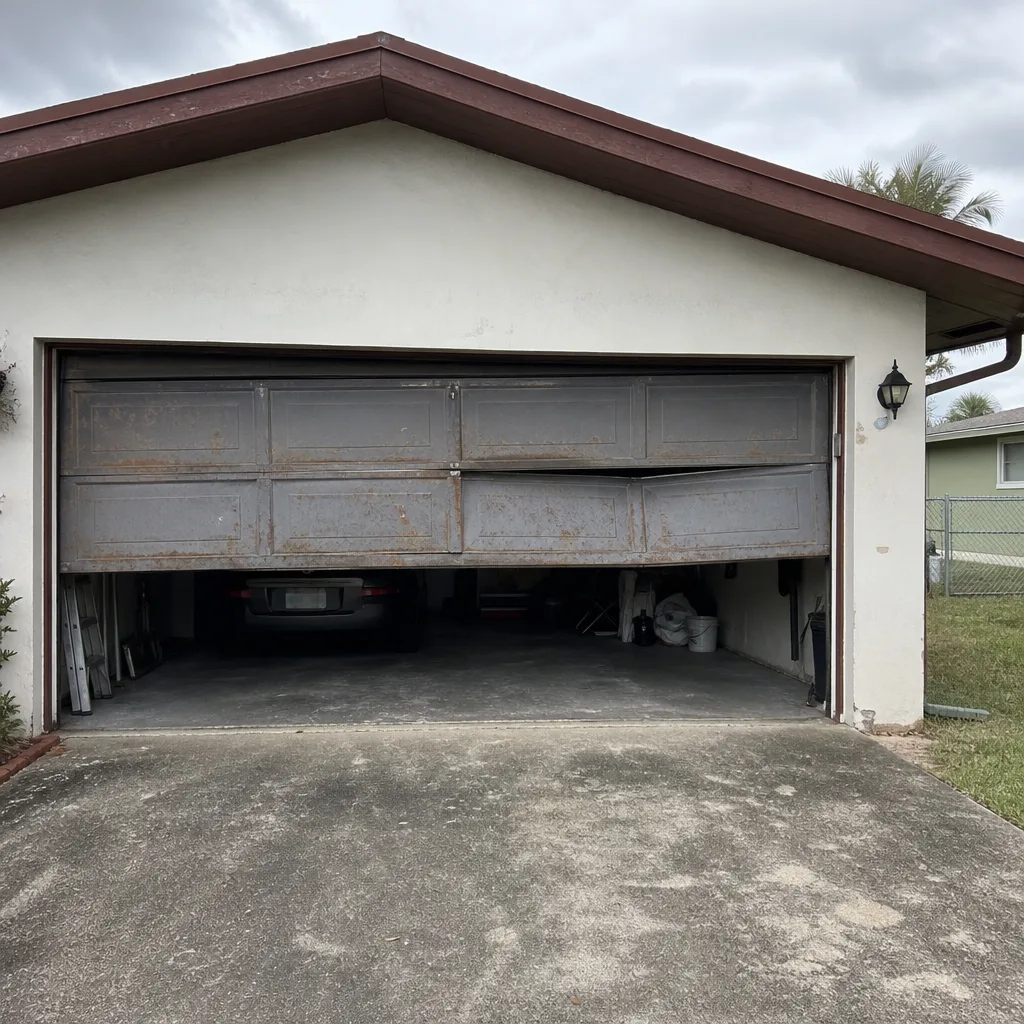 Before
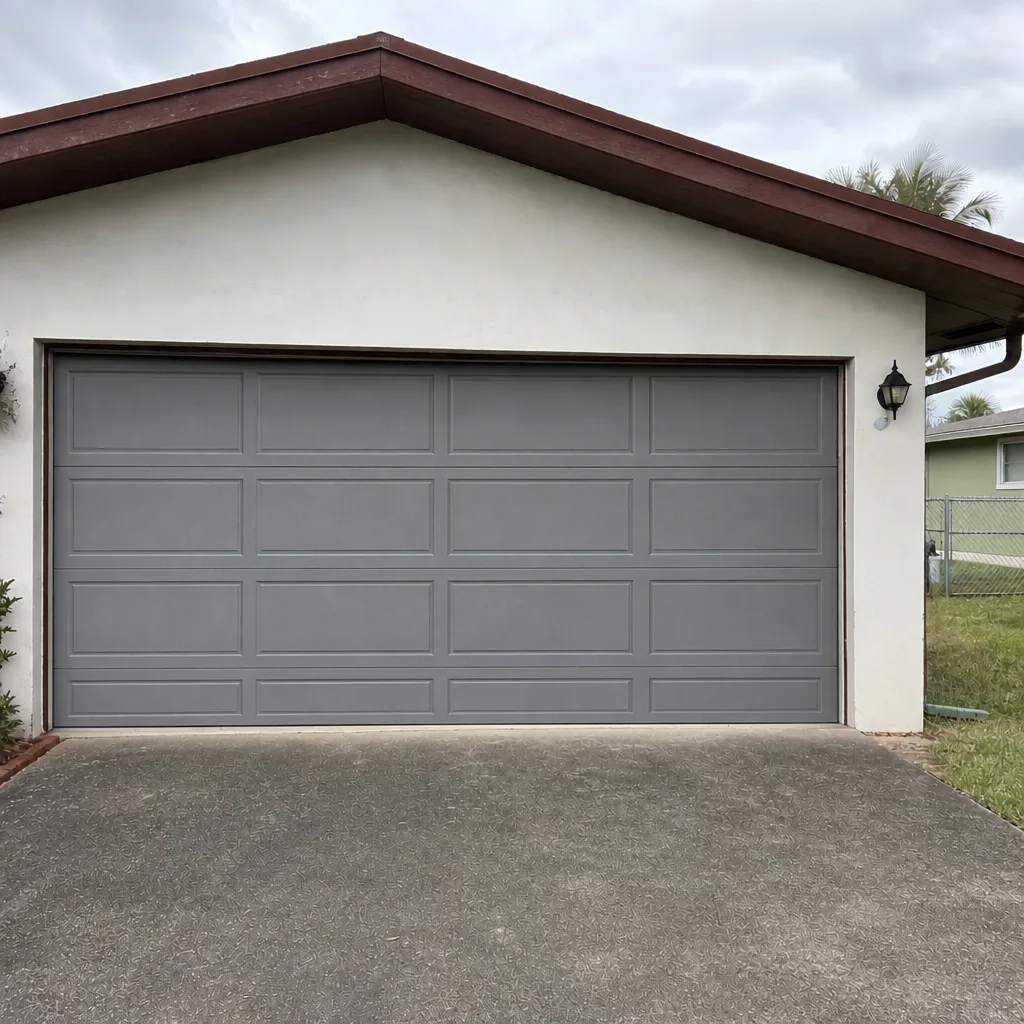 After
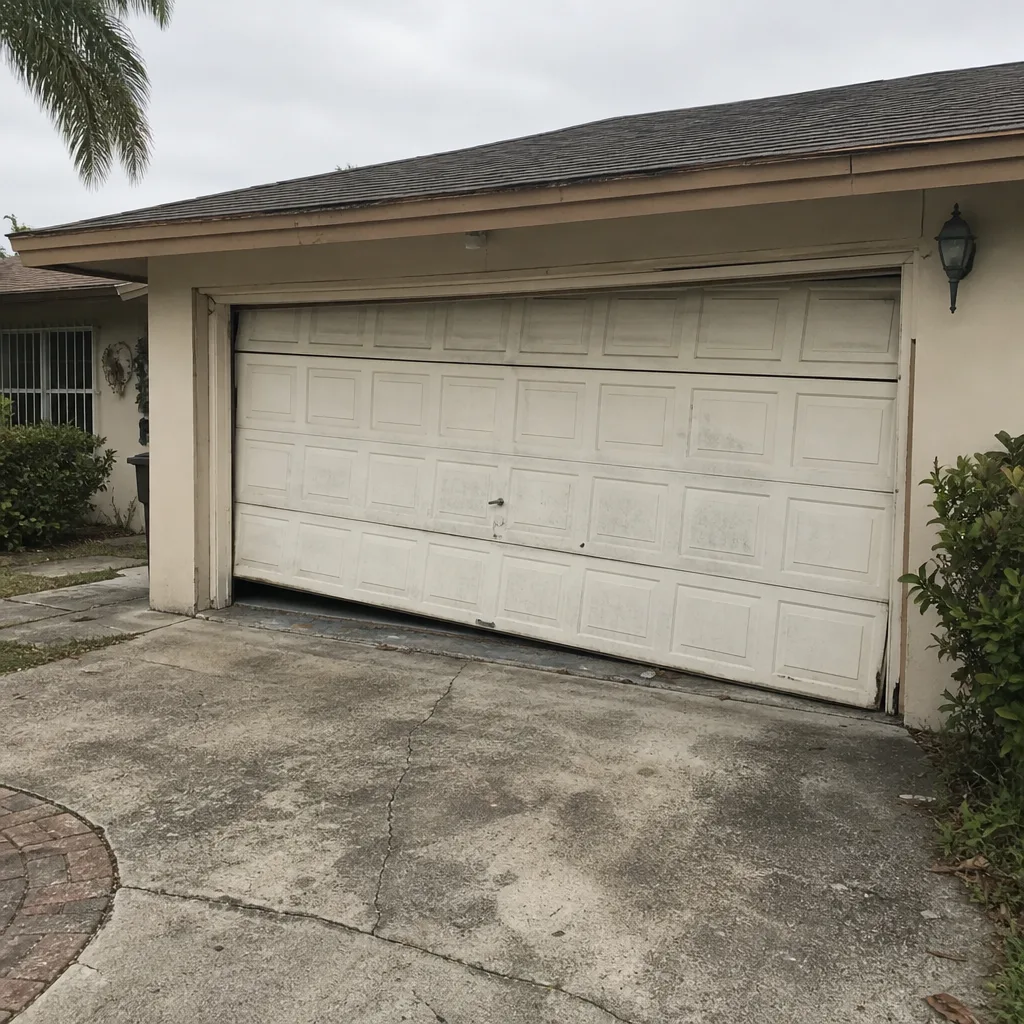 Before
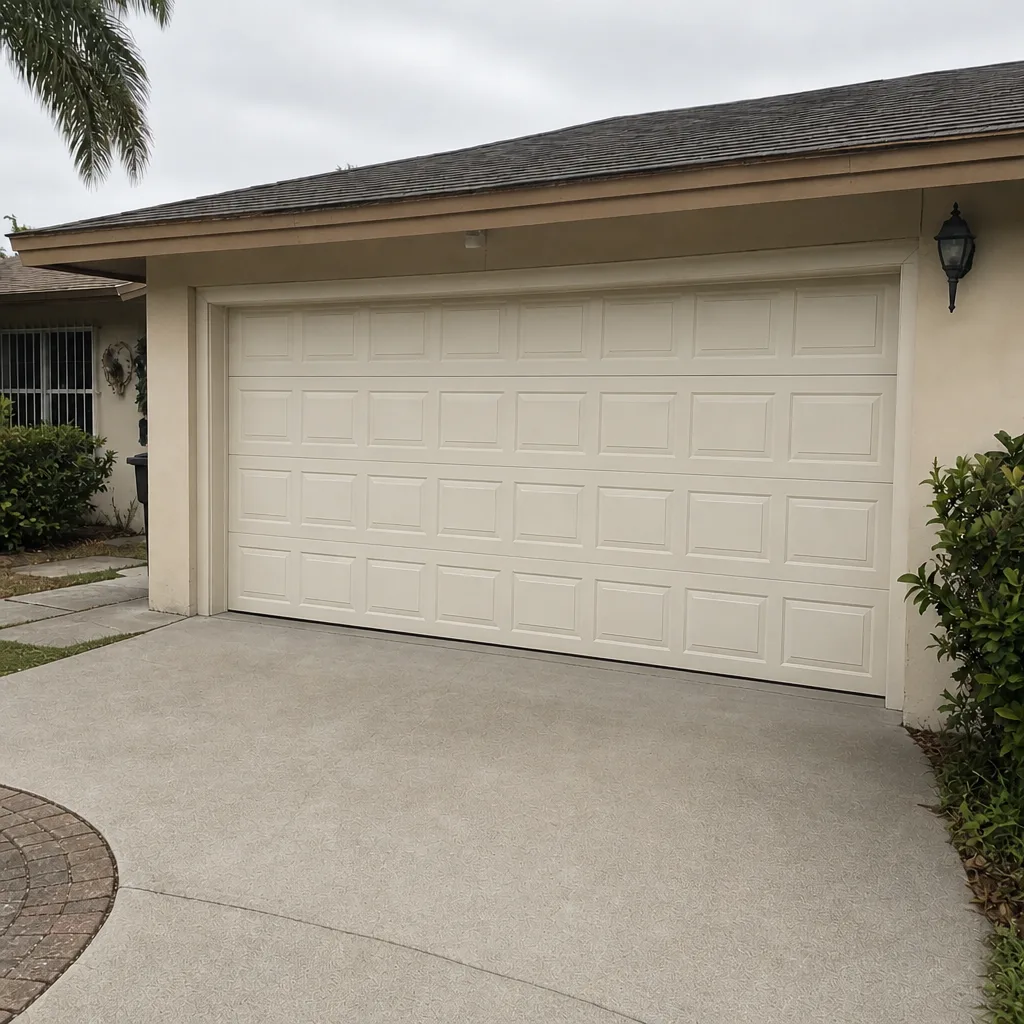 After
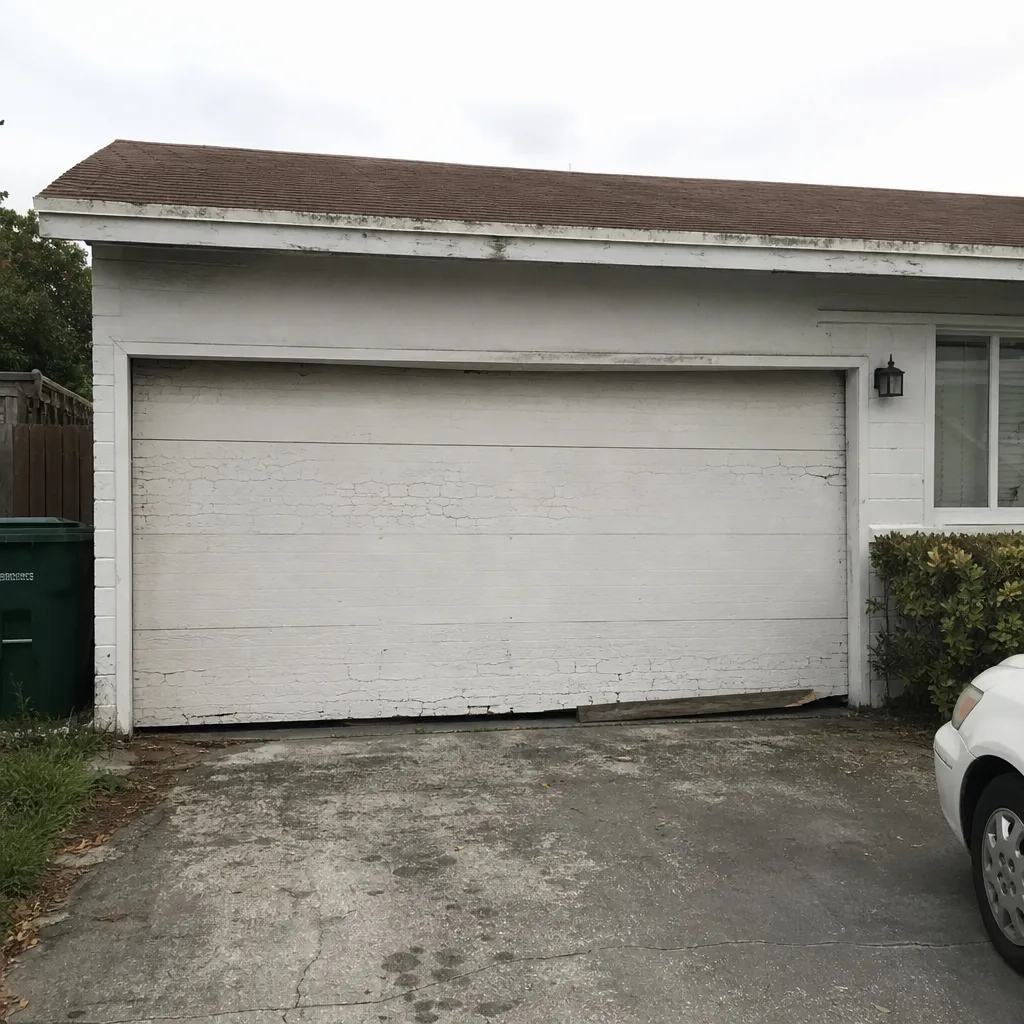 Before
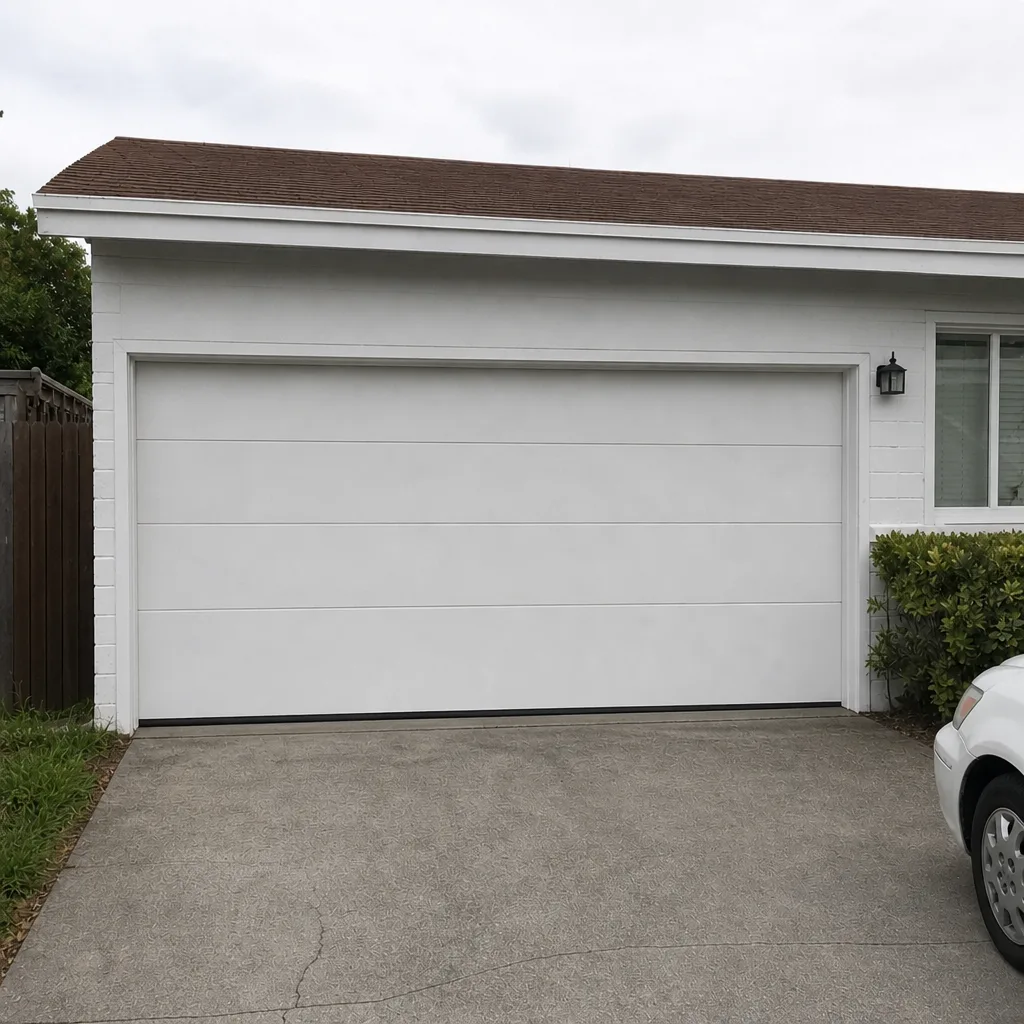 After
When to Call a Professional
Some garage door problems are genuinely worth a call right away, and some can wait for a scheduled visit. Call immediately if the door won’t close and can’t be secured, if a spring or cable has visibly broken, if the door is hanging off its track, or if the opener’s motor runs but the door doesn’t move. Those are the situations where a trained technician is worth the price of the visit today. Wait on a scheduled appointment for a door that’s running rough, a remote that needs reprogramming, weather-sealing that’s degrading, or a panel that’s cosmetically damaged. What you should never do is attempt spring or cable work yourself. Those components are under significant tension and a failure can cause serious injury. Miami Gardens Garage Door Repair Co offers free estimates in Miami Gardens. Call (877) 583-5491 and we’ll tell you honestly whether your door needs same-day attention or can be scheduled.
Frequently Asked Questions
Search the company’s license number in the Florida DBPR public license lookup, confirm the status shows current and active, and verify that the business name on the license matches the name on your estimate. This takes under two minutes and should be done before anyone comes to your home. Call (877) 583-5491 if you’d like us to walk you through a free estimate after you’ve done your checks.
An NOA is a Notice of Acceptance, the documentation that shows a product is approved for use in Miami-Dade County. If you’re having a new door or panel installed, ask the contractor for the NOA number and the product approval documentation for the specific model being proposed. A contractor who works regularly in Miami-Dade will have this readily available. Call (877) 583-5491 for a free estimate with the documentation included.
Yes. Torsion springs are under enough tension to cause serious injury if they release unexpectedly, and the handling procedures require specific tools. This is the one part of garage door work we strongly recommend leaving to a trained technician. If a spring has visibly broken or the door won’t lift, call (877) 583-5491 rather than attempting the repair.
Most common repairs fall into a middle range of a few hundred dollars, with spring replacements and opener repairs at the lower end and full track or panel work at the upper end. The specific range depends on the door, the parts needed and the type of system. We give a free written estimate before any work starts, and the quoted price is the price. Call (877) 583-5491 for a free estimate.
Almost never. After a major South Florida storm, unlicensed operators show up in Miami Gardens offering garage door work with immediate quotes. Legitimate companies don’t usually get work that way. Check the license, ask for a written estimate and confirm insurance before agreeing to anything.
It should itemize parts by quantity and brand, describe the labor scope, state who pulls the permit, spell out manufacturer and labor warranty terms, and give a clear payment schedule. The written estimate is what sets your final price, so verify every detail before signing. Call (877) 583-5491 for a free estimate in Miami Gardens.
The Bottom Line
Hiring a garage door contractor in Miami Gardens comes down to verification, not intuition. Check the DBPR license and confirm it’s current. Ask for the certificate of insurance, both liability and workers’ comp. Request the NOA number and product approval documentation for any new door or component in Miami-Dade County. Insist on a written, itemized estimate that covers parts, labor, warranty and payment terms, and treat a contractor who resists any of that as an answer in itself. Ask about spring type and opener brand to separate technicians from salespeople. Do the vetting before the emergency, not during it. Our technicians have up to 9 years of experience, and we work on over eight of the most common brands so you don’t have to shop around for the right specialist. To get started, call (877) 583-5491 for a free estimate.
Written by the team at Miami Gardens Garage Door Repair Co.