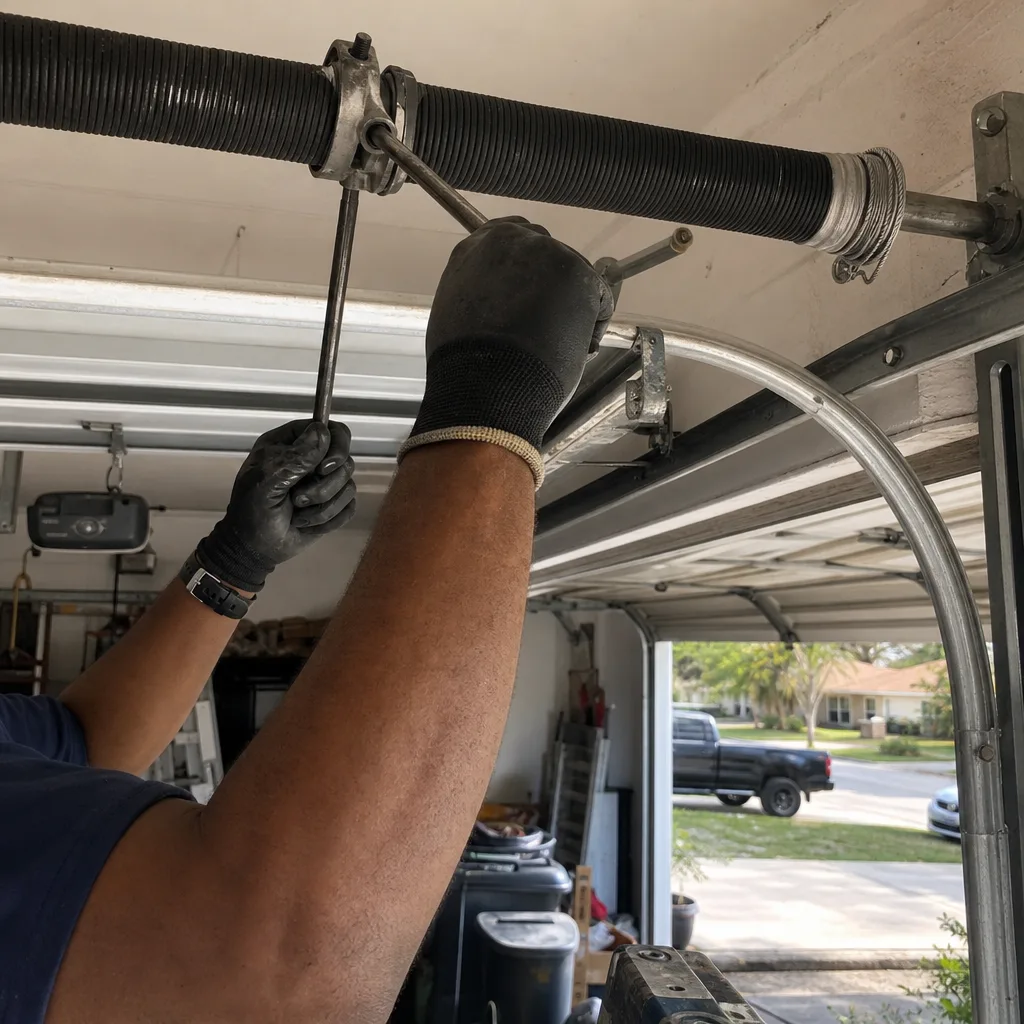
Last updated November 22, 2026
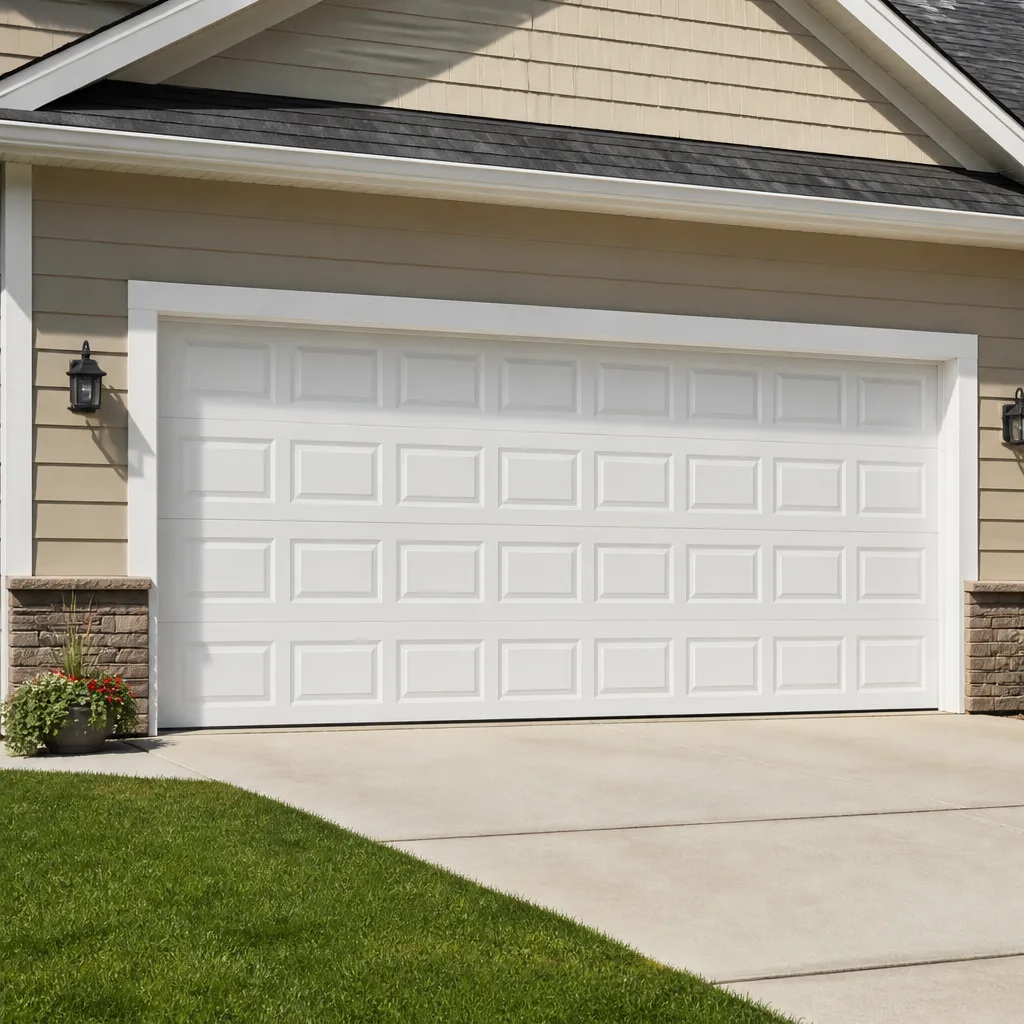 Raised-panel steel
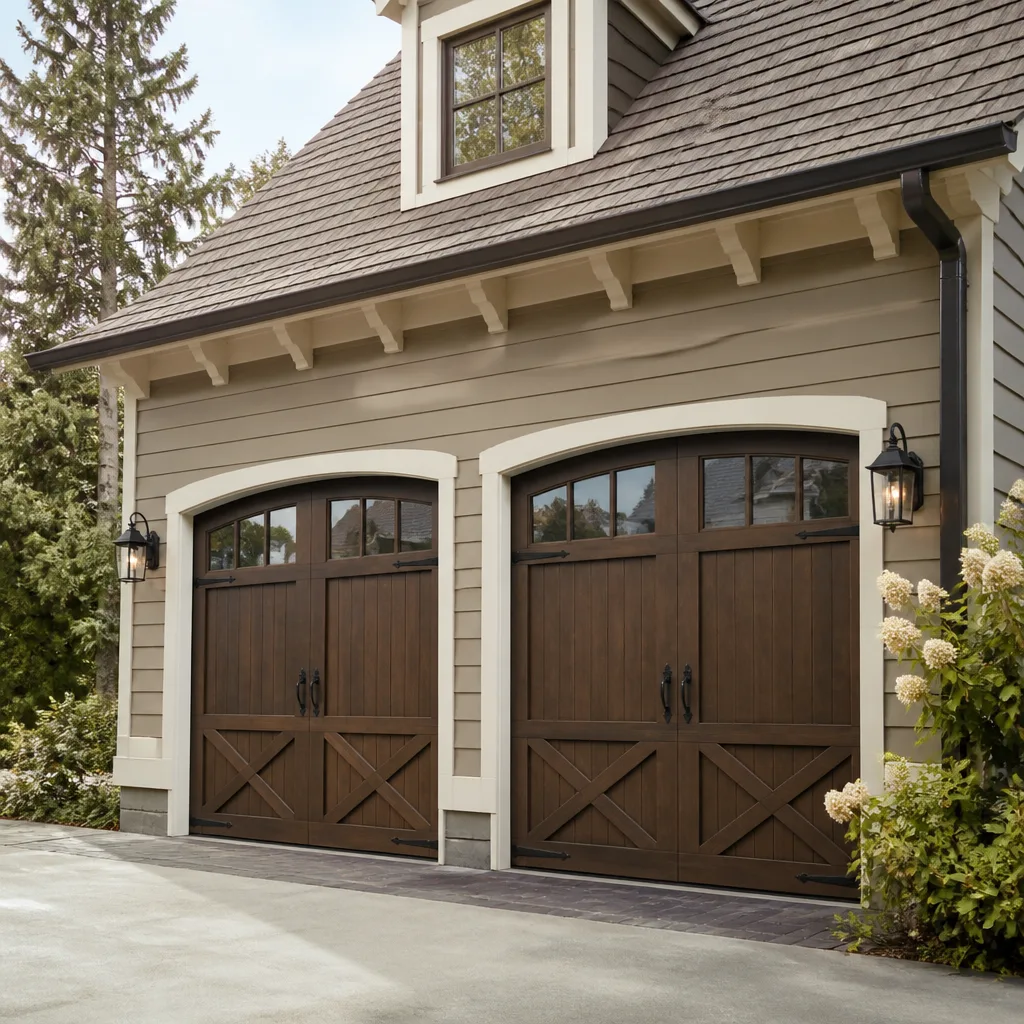 Carriage house
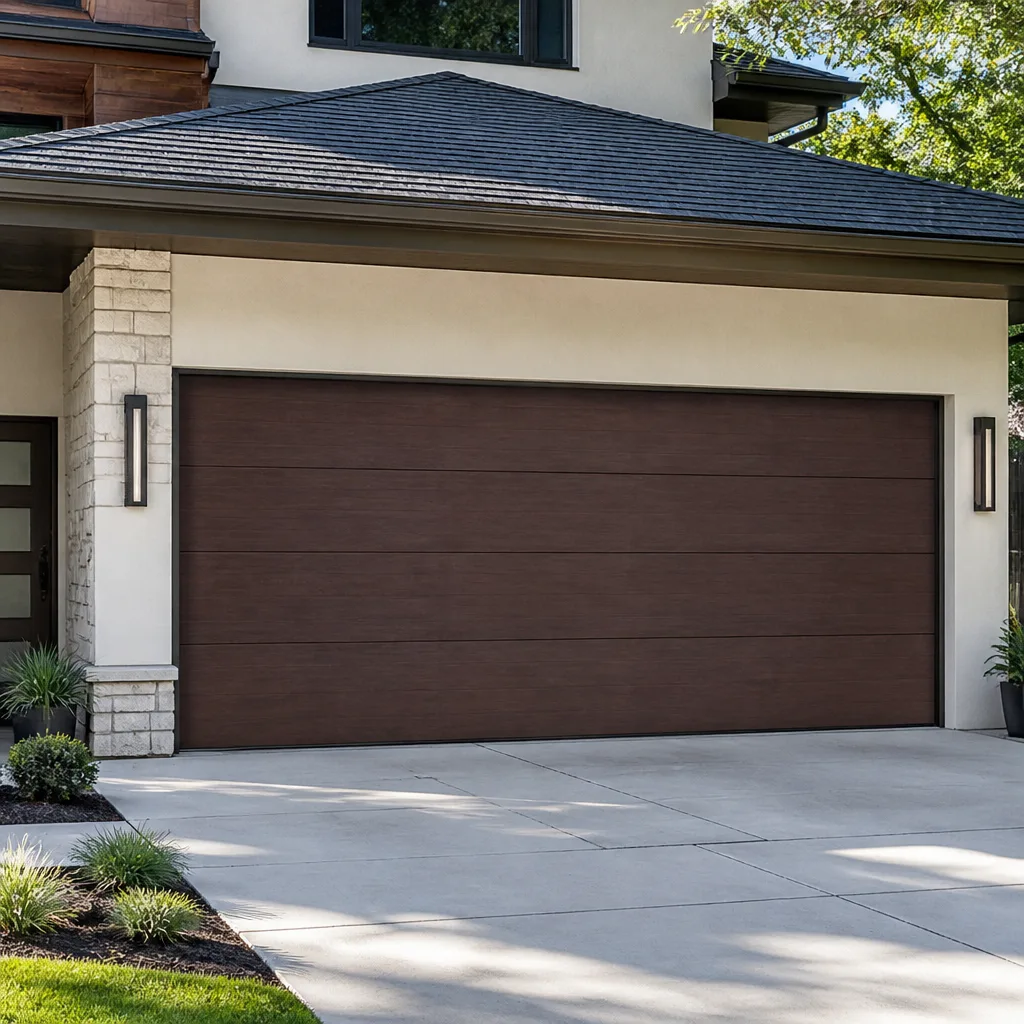 Modern flush
 Full-view glass
 LiftMaster openers
 Chamberlain openers
Full 25-point door and opener safety check with every visit - springs, cables, rollers, tracks, and your LiftMaster or Chamberlain opener included
You get a price before we start. It does not change when the pro arrives.
Get your free estimateThe Complete Guide to Garage Doors in Miami Gardens
Most garage door guides are written for climates with four seasons. Miami Gardens has two: hurricane season and construction season – and your door has to survive both. National checklists talk about ice dams and freeze cycles that mean nothing here, while skipping the two forces that actually wear out every door in this city: storm-rated code requirements and year-round heat with near-constant humidity. This guide is built the other way around. We’ll walk through which parts fail first in Miami Gardens, how local product approval shapes what you can legally buy, how CBS construction changes door selection, and where repair stops making sense and replacement starts.
Quick Answer
A garage door in Miami Gardens should be chosen and maintained around three facts: it must meet Miami-Dade product approval and wind-load standards, it lives in heat and humidity that speed up corrosion and spring fatigue, and it’s the largest moving entry point on a South Florida home. Springs, rollers, hinges and openers wear faster here than in cooler climates, so annual inspection and prompt repair matter more than in most of the country.
Styles & brands we work with
- Raised-panel steel
- Carriage house
- Modern flush
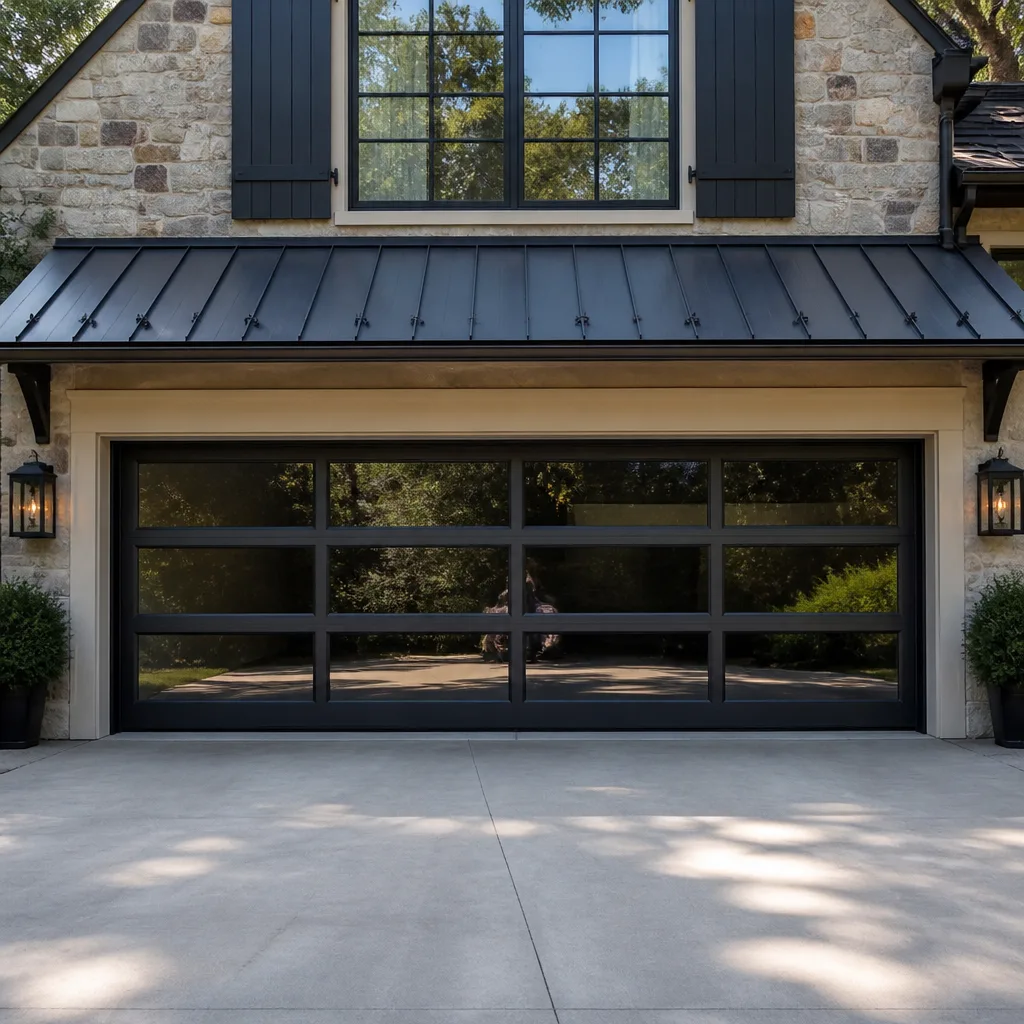
- Full-view glass
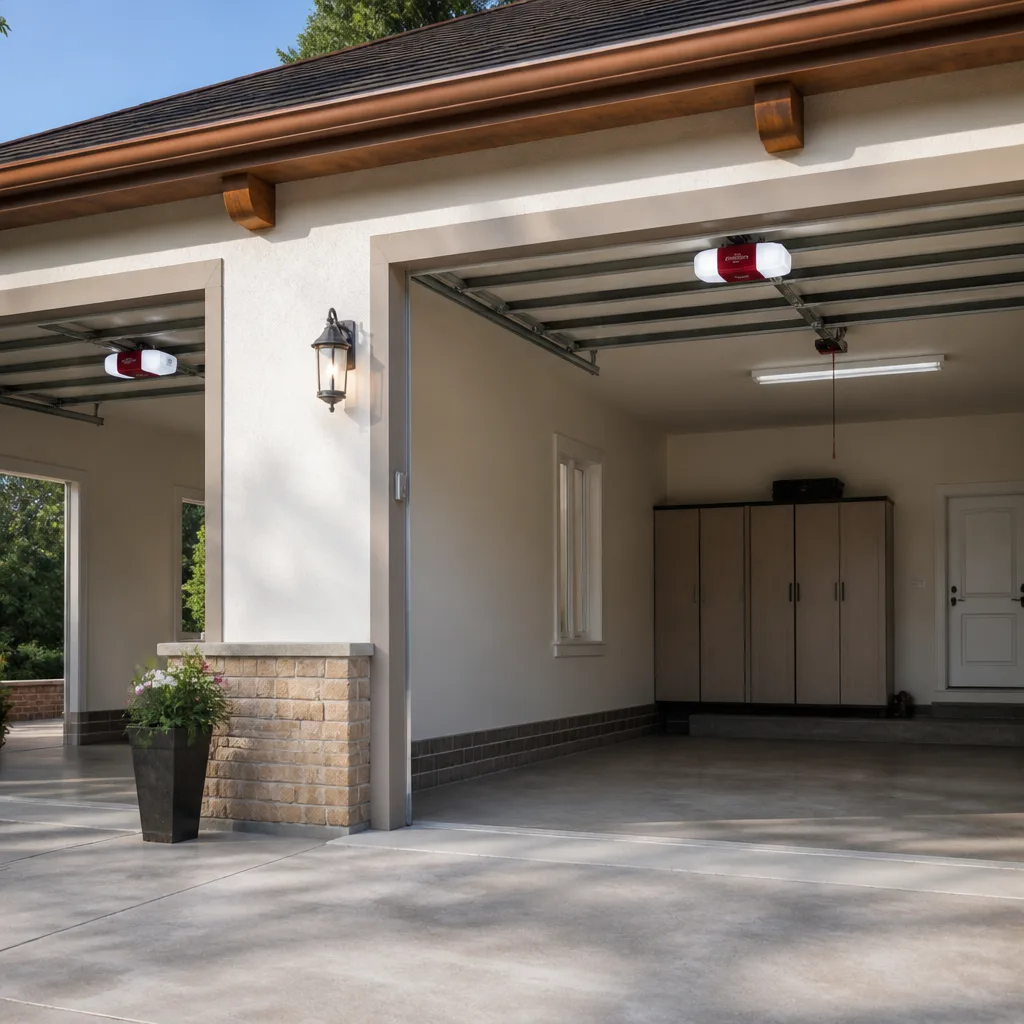
- LiftMaster openers
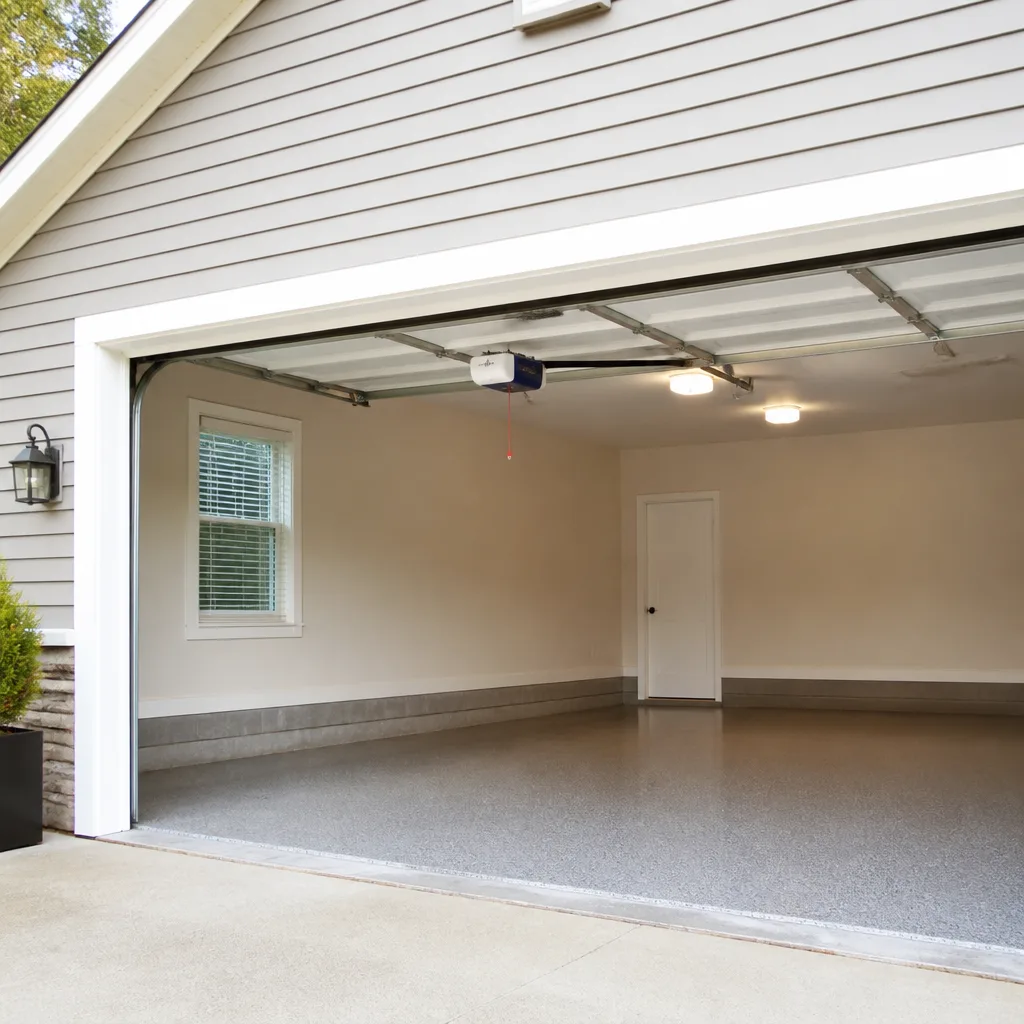
- Chamberlain openers
Table of Contents
- Why Garage Doors Are Different in Miami Gardens
- How Miami-Dade Product Approval Shapes Every Door Purchase
- Which Parts Corrode Fastest and What the Timeline Looks Like
- Standard Spec vs. Miami-Dade Compliant Spec: What You Pay For
- Door Styles, CBS Homes, and How Structure Picks Your Door
- Springs and Openers: The Two Systems That Fail Separately
- Repair or Replace? A Decision Framework
- Weatherproofing the Whole Structure Around the Door
Why Garage Doors Are Different in Miami Gardens
In a four-season climate, a garage door spends part of the year cold and idle. In Miami Gardens it runs in warm, humid air year-round, which changes the wear pattern on almost every component. Steel doesn’t get a break. Springs cycle through expansion and contraction more gently than in freezing weather but far more often, because the door gets used every day of the year. Humidity works slowly on hinges and fasteners, then suddenly when it finds a scratch in the finish.
The second difference is structural. Much of Miami Gardens was built up with CBS block homes, townhomes and newer subdivisions, and those walls are strong – which means the weak points around a garage door are the opening itself and the hardware that holds the door, not the wall. A door that’s correctly anchored into CBS construction behaves very differently in a storm than a door bolted hastily into a builder-grade opening.
The third difference is code. Miami-Dade County has its own product approval process for impact-rated products, and a garage door is one of them. That means the door you can legally install here isn’t just a style choice – it carries a specific rating tied to a specific product, tested and listed. A generic “hurricane-rated” label isn’t enough in this county.
Put those three together and the practical lesson is simple: a Miami Gardens door needs to be selected for code, installed for the structure it sits in, and maintained for heat and humidity. Anything less and you’re buying repair cycles.
How Miami-Dade Product Approval Shapes Every Door Purchase
A garage door installation in Miami Gardens isn’t a pure design decision – it’s a code decision first. Miami-Dade requires product approval for impact and wind-load rated building products, including garage doors, and a compliant door comes with documentation linking that specific product to its approval. When a purchase goes wrong here, it usually goes wrong at exactly that point: a door is picked for looks, then the paperwork doesn’t match.
Here’s the sequence we walk homeowners through before any new door is ordered:
- Confirm the door’s product approval. The door model needs a current Miami-Dade approval, not a general wind-load claim. Ask to see it in writing.
- Match the rating to the opening. Size and reinforcement need to line up with what the approval covers. A door approved for one spec doesn’t automatically cover a wider or taller opening.
- Check the installation hardware. Reinforced tracks, brackets and anchors are part of the rated system. A compliant door on standard hardware is not a compliant installation.
- Keep the documentation. Labels, approvals and installation details are worth holding onto for insurance and resale questions.
- Confirm with the city’s building department. Permit and inspection requirements for a door replacement are set locally, so a quick call to the City of Miami Gardens building department settles what applies to your property before work starts.
That step-by-step is also why we don’t promise same-day installation. A new door has to be measured, ordered to the correct spec and scheduled – there’s no shortcut around the approval process. What you get instead is a free measure and a written price before anything is ordered.
Which Parts Corrode Fastest and What the Timeline Looks Like
Humidity is the quiet mechanic in every Miami Gardens garage. It doesn’t destroy a door overnight; it works on the small steel parts first, which is why the failures we see most often start at hinges, rollers and fasteners long before the panels themselves show a problem. Warmth speeds the reaction up, and a garage that traps moist air – common when vents are blocked or a door seals too tightly – makes it worse.
What typically ages first, in order:
- Hinges and roller stems. The smallest, thinnest steel parts and the first to show surface rust. Once a hinge stiffens, the door gets noisier and the opener works harder.
- Bottom brackets and the bottom seal. Closest to the floor, where moisture sits longest. A hardened seal also lets water and pests in.
- Track edges and fastener heads. Rust starts at scratches and at the fasteners holding the track, which is exactly where alignment drifts.
- Paint and finish on steel panels. Any chip becomes a rust starting point. Once it spreads along a seam, a panel repair becomes a panel replacement.
- Springs. Corrosion pits the wire and shortens spring life. This is the mechanical failure we get called for most.
The practical takeaway: in Miami Gardens, lubricating hinges, rollers and springs on a regular schedule isn’t cosmetic maintenance – it’s what keeps tiny rust points from turning into a full hardware replacement. A wash-down of the door and a quick touch-up on chips does more than most people expect.
Standard Spec vs. Miami-Dade Compliant Spec: What You Pay For
A standard garage door and a Miami-Dade compliant door look similar on the outside and differ substantially underneath. The price gap is real, and it isn’t decorative – it pays for the structural work that lets the door resist wind load and hold its approval.
Where the extra cost sits:
- Reinforcement. Compliant doors carry heavier gauge steel, additional struts and braced sections that a standard door doesn’t.
- Track and bracket hardware. The rated system includes reinforced tracks and heavier anchoring designed for the wind load at the opening.
- Testing and documentation. Product approval involves actual testing and listing, and that cost is built into the product.
- Correct installation. A compliant door installed to the wrong hardware spec doesn’t perform as approved, and getting that right takes skilled labor.
For a homeowner in Miami Gardens, that gap is justified for one reason: it’s what the building code requires for a door in this county, and it’s what your insurer will ask about. Buying a cheaper standard door and hoping nobody checks is a false economy – the door still has to pass inspection, and it still has to protect the opening it sits in.
Door Styles, CBS Homes, and How Structure Picks Your Door
The house picks the door more than the catalog does. In Miami Gardens, three broad housing patterns show up over and over, and each leans toward a different door approach.
CBS block homes are the classic local build. Solid walls, a defined garage opening, and often a single-car or two-car span. These homes take well to steel sectional doors with good bracing, and to insulated panels if the garage sits against living space. The block wall holds anchors firmly, which makes proper reinforcement straightforward.
Townhomes are tighter. Openings are often narrower, headroom above the door can be limited, and neighboring units mean noise and security matter. A low-headroom opener and a well-fitted door with a solid seal make the biggest difference here, and matching the style to the community’s look usually matters to the association.
Newer builds tend to have larger openings, higher ceilings and pre-wired openers. They’re the easiest candidates for insulated doors, smart openers and heavier rated hardware from the start – and the most likely to need a door that matches a developer’s spec exactly, which is where product approval paperwork gets very specific.
Across all three, one choice repeats: steel sectional doors still dominate because steel is affordable, rated easily and works with the county’s approval process. Clopay and Amarr both offer models that fit local approval requirements, and Wayne Dalton is common on townhome and builder installations. If curb appearance matters to you, a door style that echoes the home’s façade costs nothing extra; if security and durability matter more, spend the budget on reinforcement and hardware instead.
Springs and Openers: The Two Systems That Fail Separately
A complete garage door setup is two systems working together: the door itself – panels, springs, tracks, cables and hardware – and the opener – motor, rail, remotes and controls. They fail independently, and mixing up which one is broken is the most common cause of unnecessary spending. A quiet openers team called for a noisy door that was actually a worn roller is a wasted visit. A door that won’t hold itself up is almost never an opener problem.
A quick way to sort it out:
- Door won’t stay up when you lift it by hand? Springs or balance. This is mechanical – call for spring service.
- Opener runs but the door doesn’t move? Could be a stripped gear, a snapped spring, or a disengaged trolley. Look for the obvious before assuming the motor died.
- Door moves but the wall button doesn’t respond? Usually a control or safety-sensor issue, not a mechanical one.
- Door reverses or stops halfway? Sensor alignment or travel-limit settings first, mechanical second.
- Loud grinding or popping from the opener head? Gear wear inside the unit – an opener repair, not a door repair.
On the opener side, the brand you already own shapes how fast a repair goes. LiftMaster and Chamberlain share most of their control architecture, Genie has its own parts family, and Craftsman units often turn up in older Miami Gardens homes and can be repaired or replaced depending on the model. Being fluent in those systems saves diagnosis time. For motor, remote and smart-control issues specifically, see garage door opener repair. For the mechanical side of the door, garage door repair covers panels, tracks, rollers and cables.
Repair or Replace? A Decision Framework
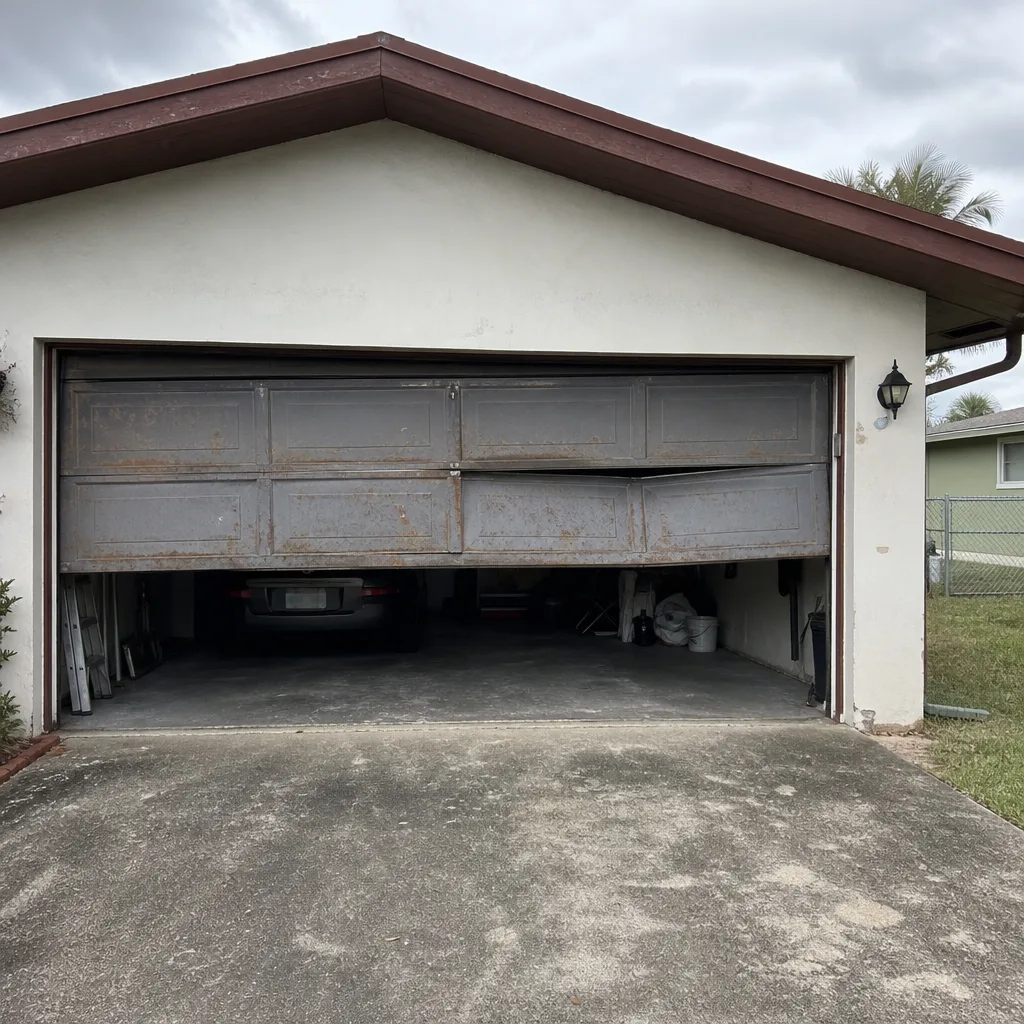
Most homeowners ask “can it be fixed?” when the better question is “should it be?” In Miami Gardens, the answer usually follows panel condition first and mechanical condition second, because corrosion moves faster than it does in cooler climates and once several panels carry rust along the seams, repair costs pile up.
Work through these in order:
- Is it one part or many? A broken spring, a bent track or a dead opener is a repair. Multiple mechanical failures at once usually points toward replacement.
- How bad is the panel corrosion? Surface rust near a scratch is treatable. Rust spreading along seams on two or more panels is the tipping point.
- Is the door still code-relevant? If the door predates current Miami-Dade compliance, replacement brings the opening up to the current standard – that’s a genuine upgrade, not a sales pitch.
- How many other parts are near the end of their life? If the door is on its second set of springs and the opener is old too, replacing both systems together is usually cheaper than repairing them one at a time.
- How quickly do you need it working? Springs and track damage are urgent and can often be repaired the same day. A new door is measured, ordered and scheduled.
Springs get their own mention because they’re the most dangerous part of the door and the most skill-dependent repair. We treat garage door spring repair as its own specialty for that reason. And remember: prices for springs are quoted per spring, so if both springs are being replaced as a matched pair, expect roughly double a single-spring quote.
Safety note
Springs, cables and bottom brackets are under high tension. The bottom bracket in particular can release suddenly, and a wound torsion spring can seriously injure an untrained person. Don’t attempt to loosen, cut or adjust a spring or cable yourself – have a trained technician handle it.
Weatherproofing the Whole Structure Around the Door
The garage door is the largest moving part of a South Florida home, and weatherproofing it isn’t only about the door – it’s about the opening the door seals. Heat and humidity enter through gaps, and so does wind-driven rain. Getting the seal right protects the door, the tools and car inside, and the home’s indoor air quality.
What actually helps:
- A good bottom seal. The first line of defense against water and pests. A hardened or torn seal is cheap to replace and does a lot of work.
- Side and top seals. Close the gaps at the jambs. These wear out with UV exposure and heat, so check them when you check the bottom.
- Well-aligned tracks. A door that seats evenly seals better. A misaligned track lets air and water past one side.
- Insulated panels where the garage touches living space. A cooler garage reduces heat transfer into adjacent rooms and puts less stress on the AC system.
- Ventilation. A garage that traps moist air corrodes hardware faster. Keeping vents clear helps.
- Sealed fasteners and hardware. A light coat of lubricant on hinges, rollers and springs slows rust and reduces load on the opener.
Beyond the seal, there’s a structural reassurance that comes with a compliant door on compliant hardware: the opening is braced and anchored to resist wind load, which is one of the biggest concerns in a South Florida home. A door that closes tight and holds firm matters for both the weather and the security of the whole structure.
Common Mistakes to Avoid
- Buying a door without checking that its product approval matches the opening. A rating on the model is not the same as an approval for your specific size and reinforcement spec. Confirm before money changes hands.
- Treating springs as a single purchase when they come in pairs. Often both fail close together, and quotes are per spring. Not budgeting for the pair is the most common surprise.
- Ignoring minor rust on hinges and rollers. In Miami Gardens, small rust points turn into full hardware replacement faster than in drier climates. A little lubricant and touch-up paint go a long way.
- Piling cardboard and furniture right up against the door. Blocking sensors or jamming a track with stored items is a repair waiting to happen – and in a garage, it’s often a fire risk too.
- Skipping the bottom seal replacement. It’s one of the cheapest parts on the door and one of the most important in a humid climate. Replacing it when it hardens prevents water intrusion and pest problems.
- Assuming a noisy door means the opener is dying. Noise usually comes from worn rollers and hinges. Diagnosing the door before replacing the opener avoids an expensive wrong guess.
- DIY spring work. It’s the most dangerous repair on the door and not a homeowner task. A trained technician with the right tools is the only safe option.
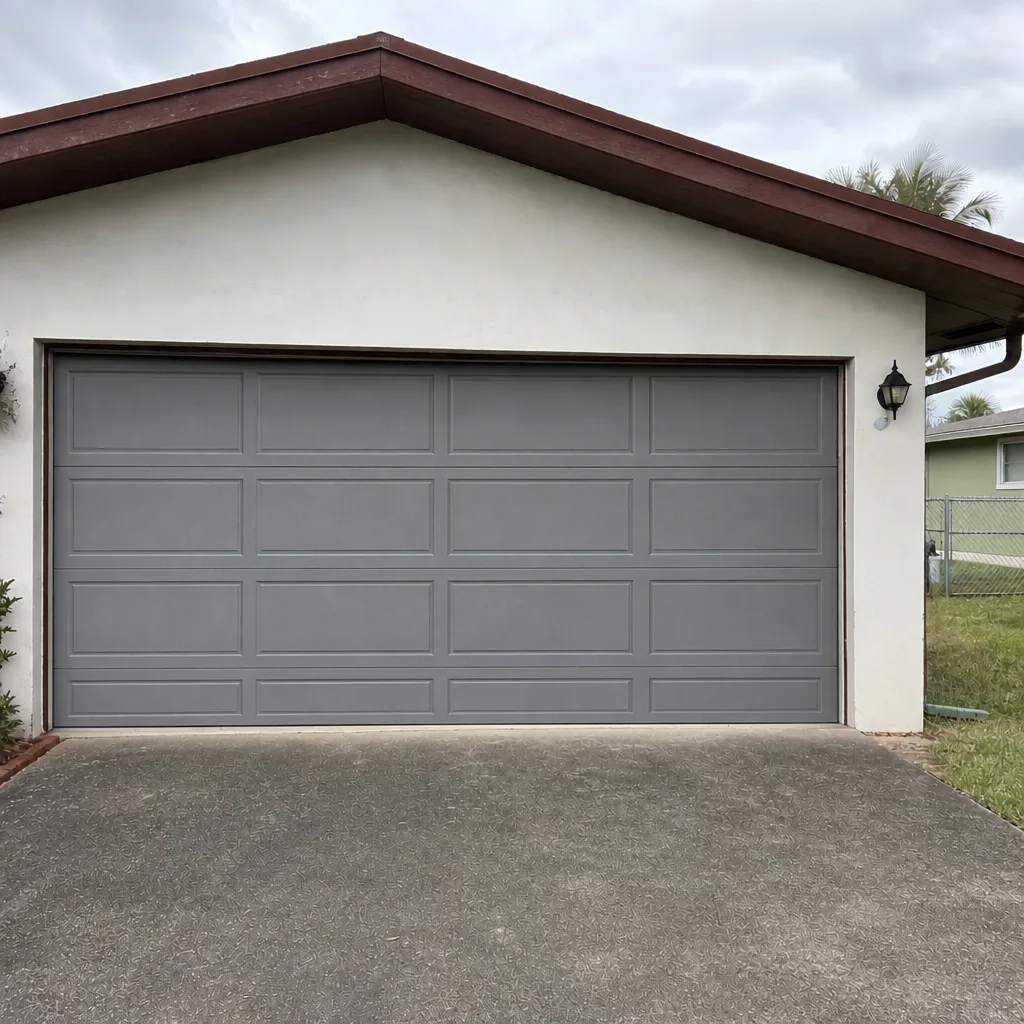
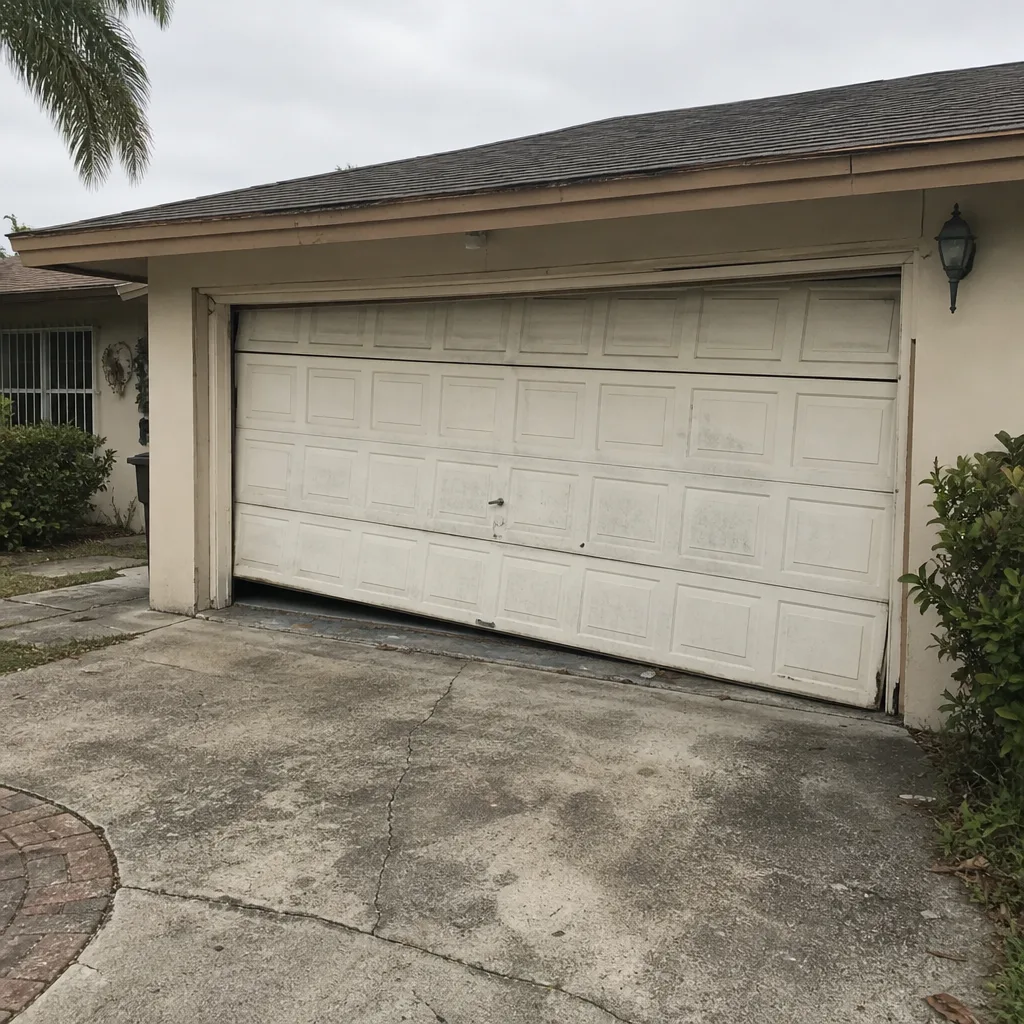
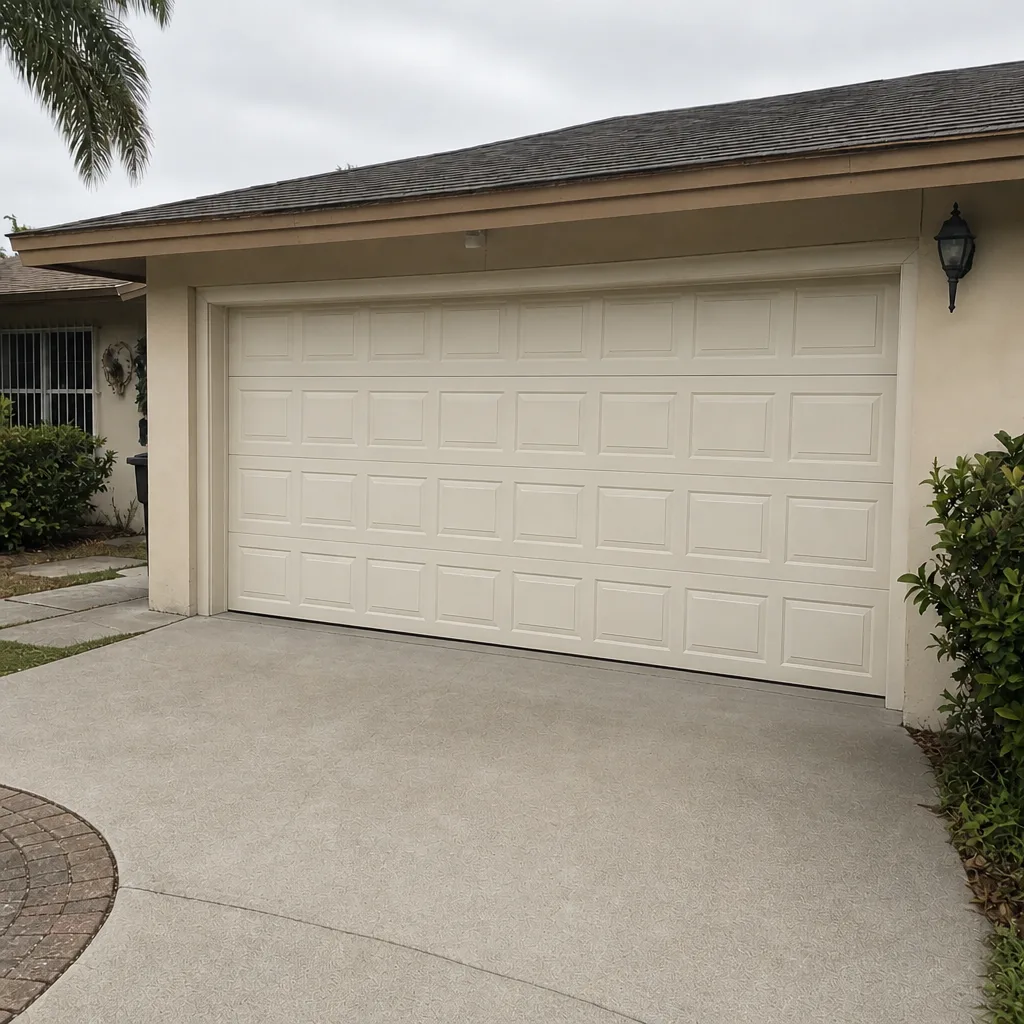
See the difference
 Before
 After
 Before
 After
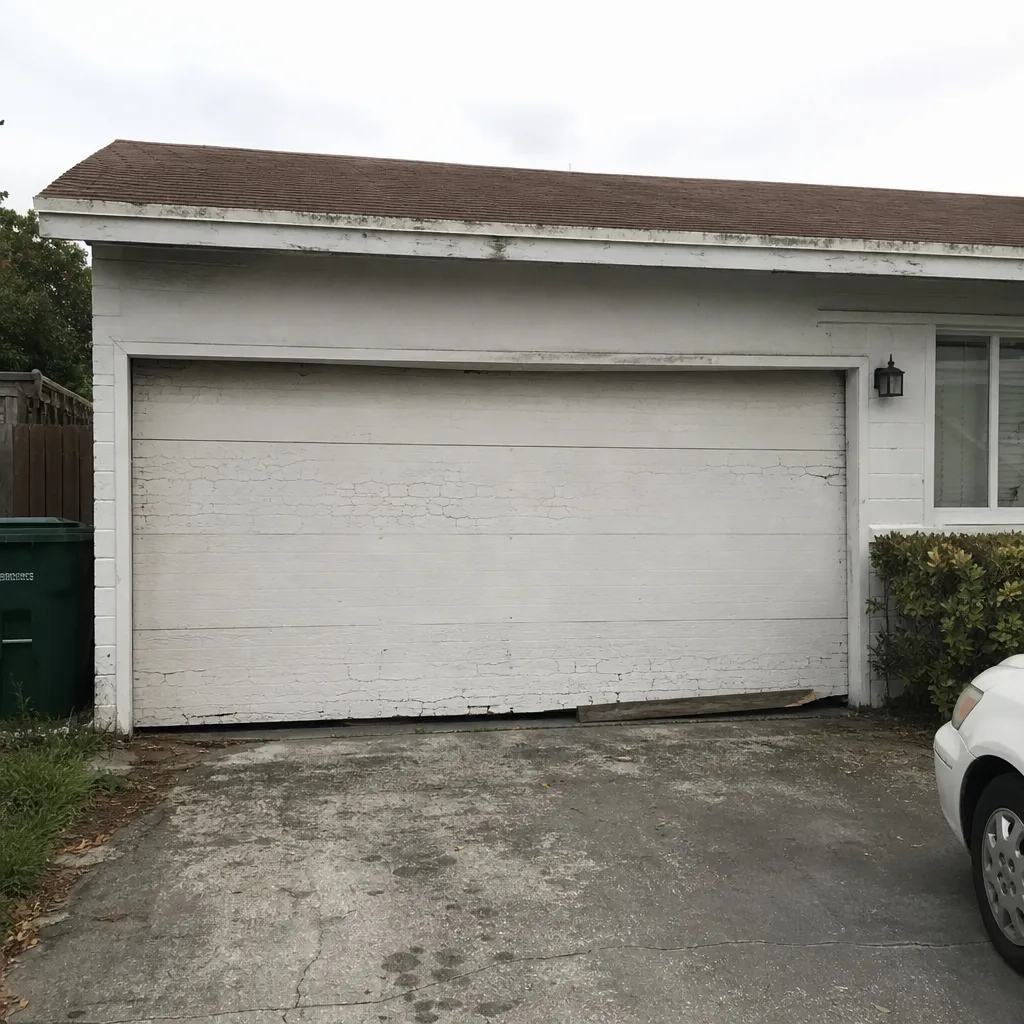 Before
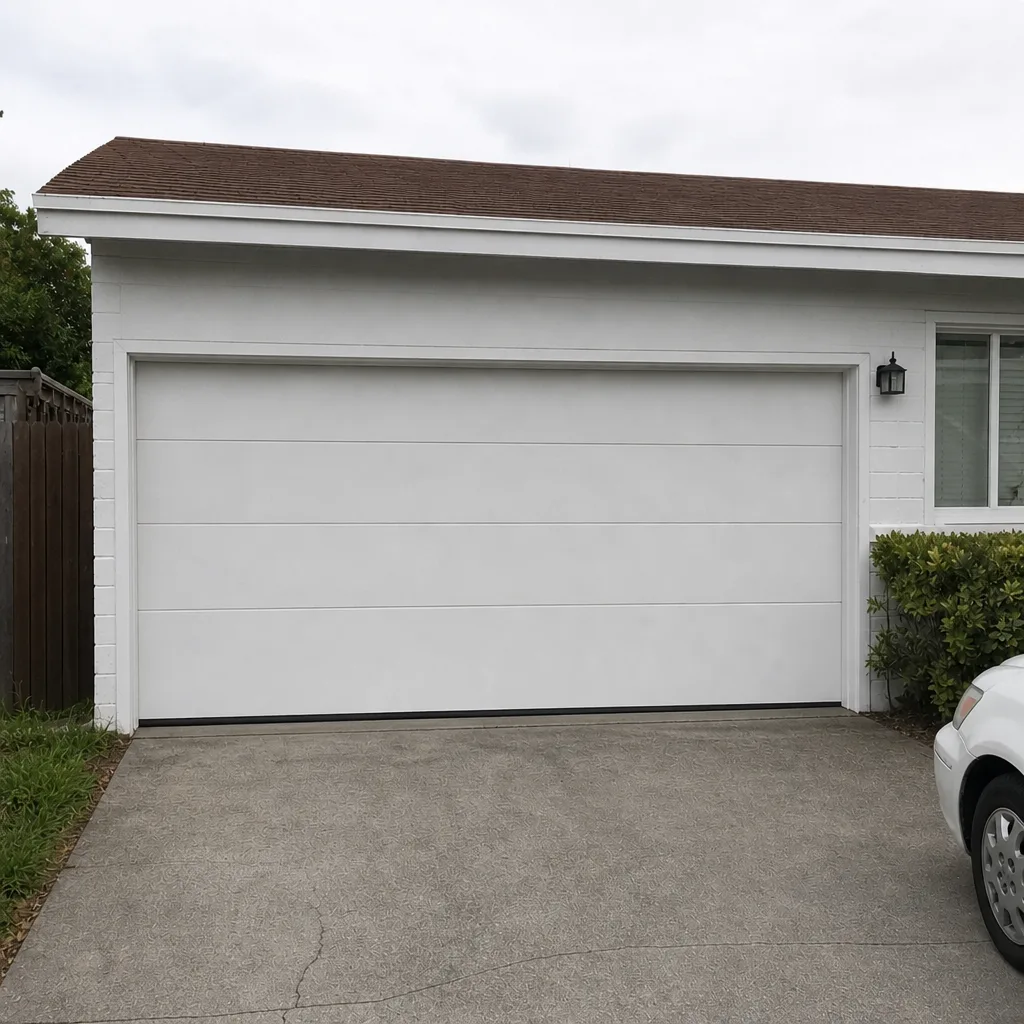 After
When to Call a Professional
Call a professional when the door won’t close or won’t open, when you can hear a spring snap, when a track is bent or the door is off one roller, or when a panel has visible rust along the seams that’s spreading. Call when the opener runs but the door doesn’t move, or when the door reverses for no apparent reason and adjusting the sensors doesn’t fix it. Call before a new door purchase to get the product-approval and sizing right the first time. Springs, cables and bottom brackets are dangerous and worth every penny of a professional service call – don’t take a chance on them.
Miami Gardens Garage Door Repair Co offers free estimates in Miami Gardens – call (877) 583-5491. If the door won’t move and it can’t wait for a scheduled appointment, we offer dedicated emergency garage door service. For every quote, the price is agreed with you before any work starts, so there’s never an invoice bigger than the estimate.
Frequently Asked Questions
Most repairs fall into ranges, not fixed prices – springs, openers, tracks and hardware all price differently, and a matched spring pair runs about double a single spring. The written estimate sets the final price, and it’s agreed before any work begins. Call (877) 583-5491 for an exact quote – estimates are free.
Often yes – a door that won’t close is exactly what our emergency service is for, with fast dispatch from 7am to 7pm. Call (877) 583-5491 and we’ll tell you the soonest we can get to you. Installation and replacement work is measured and scheduled rather than same-day.
No. You get an upfront price based on what the technician finds, you agree to it, and that’s what you pay when the job is done. If a repair reveals something additional, we discuss it with you before continuing – nothing gets added quietly to the bill.
Yes – the local pro is licensed and insured as Florida requires, and our technicians have up to 9 years of experience. A reputable garage door company should always be able to tell you that without hesitation, so ask if a company won’t.
Replacement of an impact-rated garage door in Miami-Dade County is typically treated as a building permit process because the product carries its own county approval, though the details apply per property. Always ask the Miami Gardens Garage Door Repair Co team or your city’s building department to confirm what applies to your home before ordering, and keep the approval documentation with your records.
We work on the brand you already have. That includes Clopay, Amarr, Wayne Dalton and Raynor doors, and LiftMaster, Chamberlain, Genie and Craftsman openers – both the door side and the opener side of the system. Know the model where you can; it helps us source correctly the first time.
The Bottom Line
A garage door in Miami Gardens needs three things: a code-compliant spec tied to a real product approval, hardware and panels that can take year-round heat and humidity, and prompt repair when springs, tracks or openers start to fail. Springs, hinges and bottom seals wear first here; the price gap to a compliant door is real and justified; and the door you pick should fit your CBS home, townhome or newer build. Repair when the damage is limited and replacement when code, corrosion or multiple failures stack up. Either way, a free measure and a written quote before any work starts is how a good job begins.
Ready to sort out the door? Call (877) 583-5491 for a free estimate, or use garage door repair to get started on scheduling.
Written by the team at Miami Gardens Garage Door Repair Co.